

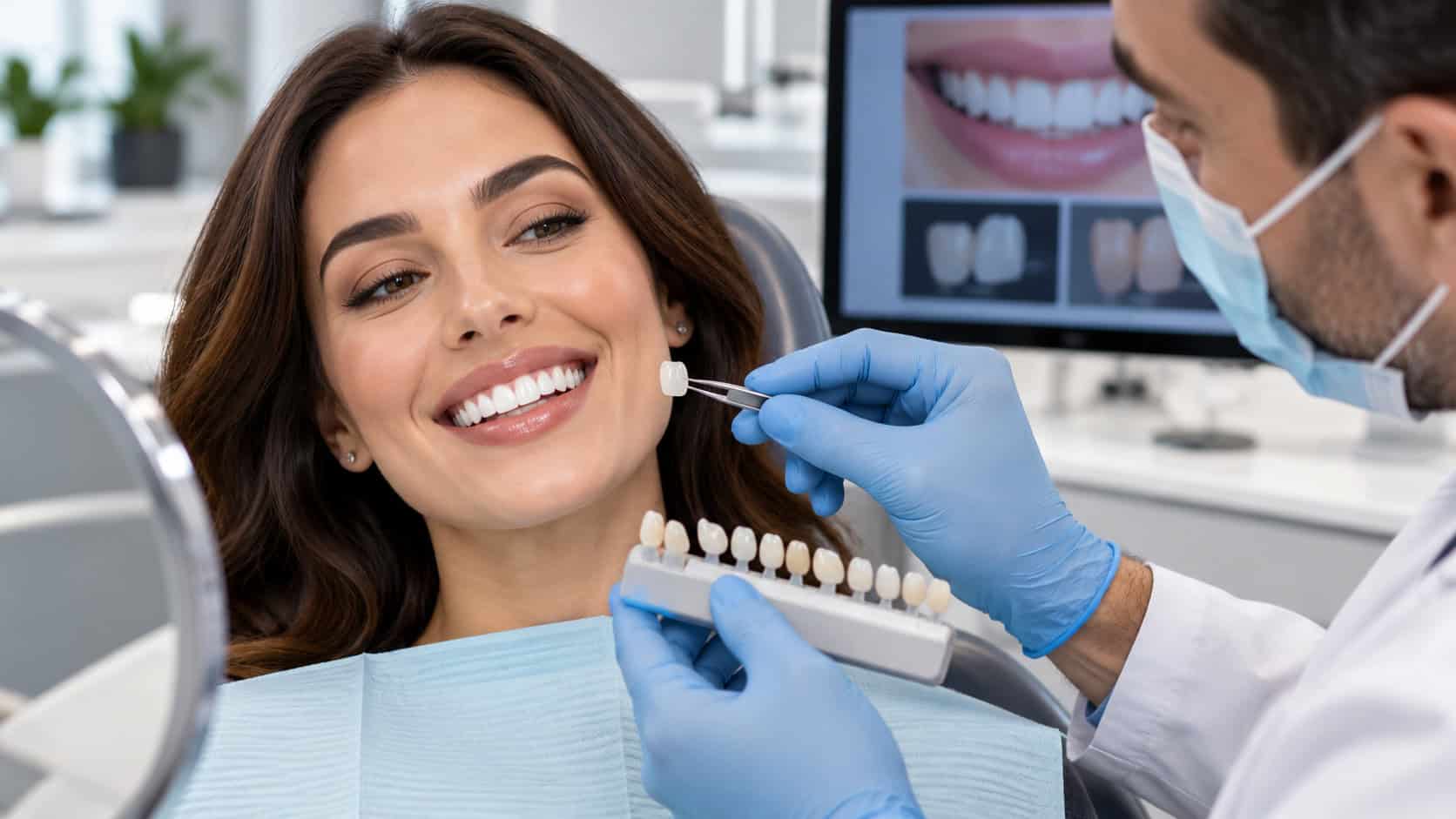
Dental veneers can change the colour, shape, and proportions of visible teeth, but the details behind the finished result often surprise patients. Before choosing veneers, it helps to understand what happens to your natural teeth, what the different materials can do, and which problems veneers cannot solve.
1. Veneers Cover the Front of a Tooth, Not the Entire Tooth
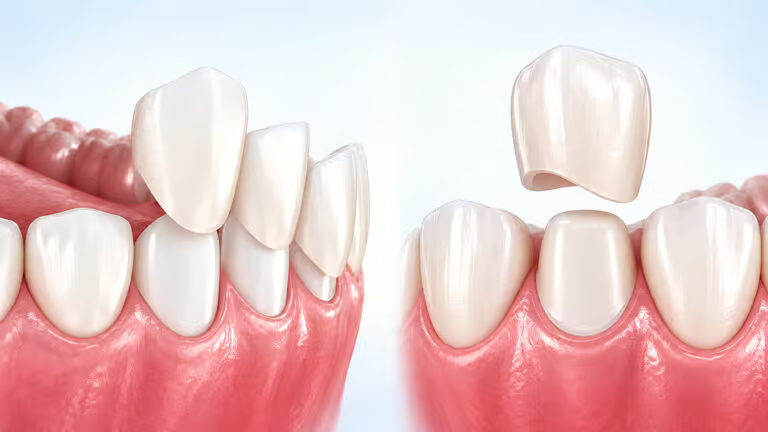
A veneer is a thin facing bonded to the visible surface of a tooth. It can disguise a small chip, uneven shape, or discolouration without covering the entire tooth like a dental crown.
That difference matters when a tooth is already badly weakened. A veneer is primarily an aesthetic restoration; it does not provide the same coverage or protection as a crown. A heavily broken tooth or one with extensive decay may need another treatment rather than a cosmetic facing.
The important question is not only which restoration looks best in a photograph. It is how much healthy tooth remains and what that tooth must withstand when you chew.
At Virtus Dental Center, we offer facettes dentaires en Albanie as part of our cosmetic dentistry services. Our team assesses the condition of the tooth before recommending how its appearance should be improved.
2. “No-Prep” Does Not Always Mean Completely Reversible
The word ultra-thin can make veneers sound like something you simply attach and remove. In reality, many veneers require a small amount of enamel to be reshaped so the new surface fits naturally and does not look bulky.
Even minimal-preparation techniques may involve permanent changes to the tooth. Enamel does not grow back after it has been removed, and a prepared tooth may need a restoration over the long term. Some carefully selected no-preparation cases may avoid enamel removal, but that cannot be promised to every patient.
The amount of preparation can also differ between teeth in the same smile. A tooth that already protrudes may need a different approach from one that sits farther back.
Before treatment, ask exactly which surfaces will be prepared and whether the proposed option is reversible in your particular case.
3. Porcelain And Composite Veneers Behave Differently Over Time
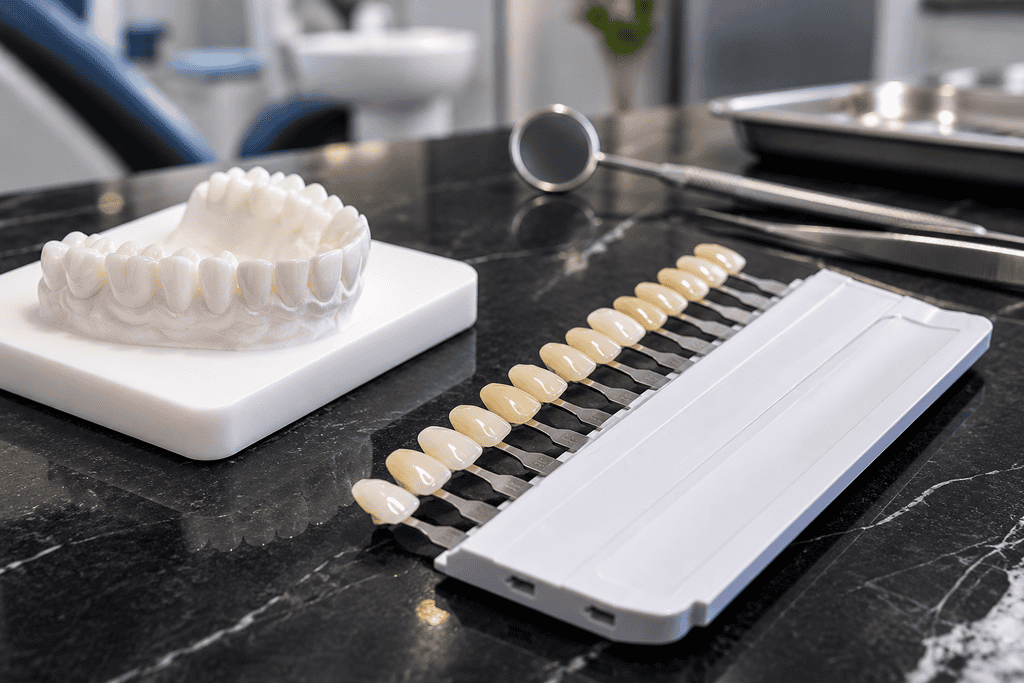
Two veneers can look similar on placement day but require different maintenance later. Porcelain veneers are custom-made ceramic restorations, while composite veneers use tooth-coloured resin that can often be shaped directly onto the teeth.
Porcelain generally resists surface staining better, while composite is usually easier to repair if a small area chips. Composite can also be more prone to staining or wear, although the result depends on habits, the bite, and how the material is maintained.
Very thin ceramic may allow some of a naturally dark underlying tooth to show through. Your dentist must balance the desired brightness against the translucency that makes teeth look natural.
At Virtus, our veneer options include porcelain, composite, and E-Max, a type of dental ceramic. Rather than choosing a material because it is described as the newest or strongest, ask how its appearance, repair options, and required preparation fit your teeth. The design and placement matter alongside the material itself.
4. Whitening Your Teeth Later Will Not Whiten Your Veneers
This is an important detail if you want a lighter smile. Tooth-whitening products act on natural teeth, but they do not change the underlying colour of existing veneers, as NHS hospital guidance on whitening explains.
Imagine choosing bright veneers for your two front teeth while the neighbouring teeth remain slightly darker. Whitening the natural teeth later may improve the match, but it will not adjust the veneers themselves. The opposite can happen over time if the natural teeth change shade and the veneers remain relatively stable.
If whitening is appropriate, it may make sense to complete it before choosing the final veneer shade. The natural tooth colour should be allowed to settle before a definitive colour match is made.
If you are considering both treatments, discuss their order before selecting a veneer shade. Our professional teeth-whitening service is one option we can assess when creating a coordinated cosmetic plan.
5. Veneers Can Hide Some Gaps But Cannot Straighten Tooth Roots
A veneer can change the outline of a tooth, making a small gap or slight irregularity less noticeable. What it cannot do is physically move a tooth or correct the position of its root inside the jaw.
This becomes important when teeth are crowded, strongly rotated, or tilted. Making them appear straight with veneers alone might require unnecessary removal of healthy enamel or create restorations that are too thick. In such cases, orthodontic treatment can address tooth position before cosmetic work is considered.
A wide space may also have causes beyond the size of the two neighbouring teeth. Closing it cosmetically without investigating those causes could produce an awkward shape or unstable result.
Virtus also offers Gouttières transparentes Invisalign et collage dentaire for appropriate patients. The more conservative choice may be to move teeth, repair one edge with resin, or combine treatments rather than cover several healthy teeth.
6. Your Bite Can Decide Whether Veneers Are A Good Idea
Front teeth do more than show when you smile. They contact other teeth when you bite, speak, and move your jaw, so their position affects how much pressure a veneer must withstand.
If you grind or clench your teeth, the repeated forces can increase the chance of chipping, cracking, or loosening a veneer. A deep overbite or certain tooth contacts can also create problems, even if your teeth look suitable in photographs.
Mention jaw soreness on waking, worn tooth edges, or a history of broken restorations during your consultation. In selected cases, a protective night guard may be considered, but it does not eliminate every risk.
A dental examination should therefore include the way your upper and lower teeth meet. Depending on the findings, the plan may involve changes to the design, management of grinding, or an alternative treatment instead of veneers.
7. A Veneer Does Not Make The Tooth Underneath Immune To Decay
Once a veneer is bonded, the natural tooth is still there. Plaque can accumulate near the edges, especially around the gumline, and exposed tooth surfaces can still develop cavities if oral hygiene is neglected.
Veneers are not lifetime fittings either. Over the years, a facing may chip, loosen, wear, or need replacement, and changes in the surrounding gums can affect how the edge looks. This is why regular dental examinations matter even when the veneers still appear attractive.
If floss starts catching on an edge, your gums repeatedly bleed, or your bite suddenly feels different, arrange a review. Small changes may be easier to manage before they become more serious.
Brush twice daily with fluoride toothpaste, clean between your teeth, and avoid using your front teeth to open packaging or bite very hard objects. Protecting the tooth and surrounding gum is just as important as keeping the veneer looking good.
Questions fréquemment posées sur les facettes dentaires
Can I get veneers if my front teeth already have fillings?
Possibly, but the size and position of the fillings matter. If little healthy enamel remains for bonding, your dentist may recommend a different restoration rather than placing a veneer over a weakened tooth.
Will I need temporary veneers before the final ones?
Temporary coverings may be used when teeth have been prepared and ceramic veneers are being made in a laboratory. Direct composite veneers may be completed in one appointment, so the steps are not identical for every material.
Can veneers make my teeth feel too thick?
Poorly planned contours can feel bulky and may affect how your lips or tongue meet the teeth. The planned thickness, shape, and bite should be checked before the definitive veneers are bonded.
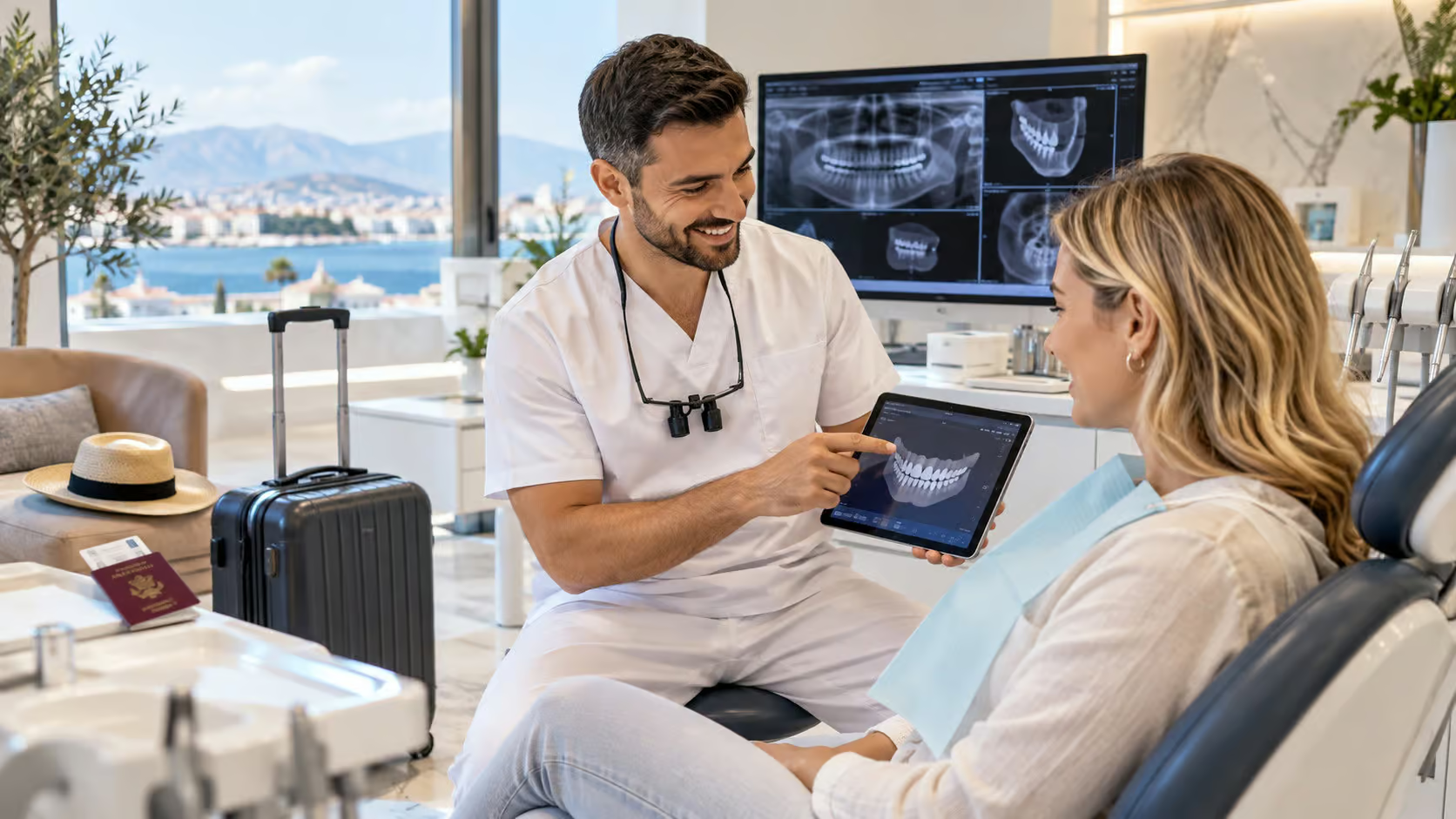
What should I do if a veneer becomes loose during a trip?
Keep the veneer safe if it has come off, and contact a dentist promptly for advice. Do not use household glue or try to attach it yourself, because the tooth and veneer must be checked before repair or rebonding.
Can I eat normally after getting veneers?
Most patients can return to ordinary meals once any anaesthetic has worn off and the dentist confirms the restoration is ready. Avoid biting directly into very hard foods or objects, and follow any temporary restrictions given for your treatment.
🦷 Contact Us About Dental Veneers
Considering veneers for stained, chipped, or uneven teeth? Contact Virtus Dental Center to ask about material options, tooth preparation, and what an individual assessment would involve.
- 📧 Courriel : info@virtus.al
- 📞 Telephone: +355 69 27 111 66
- 📍 Lieu : Rruga Teodor Keko, Pll 29, 1027 Tirana, Albania


 French
 English
 Italian
 Albanian