

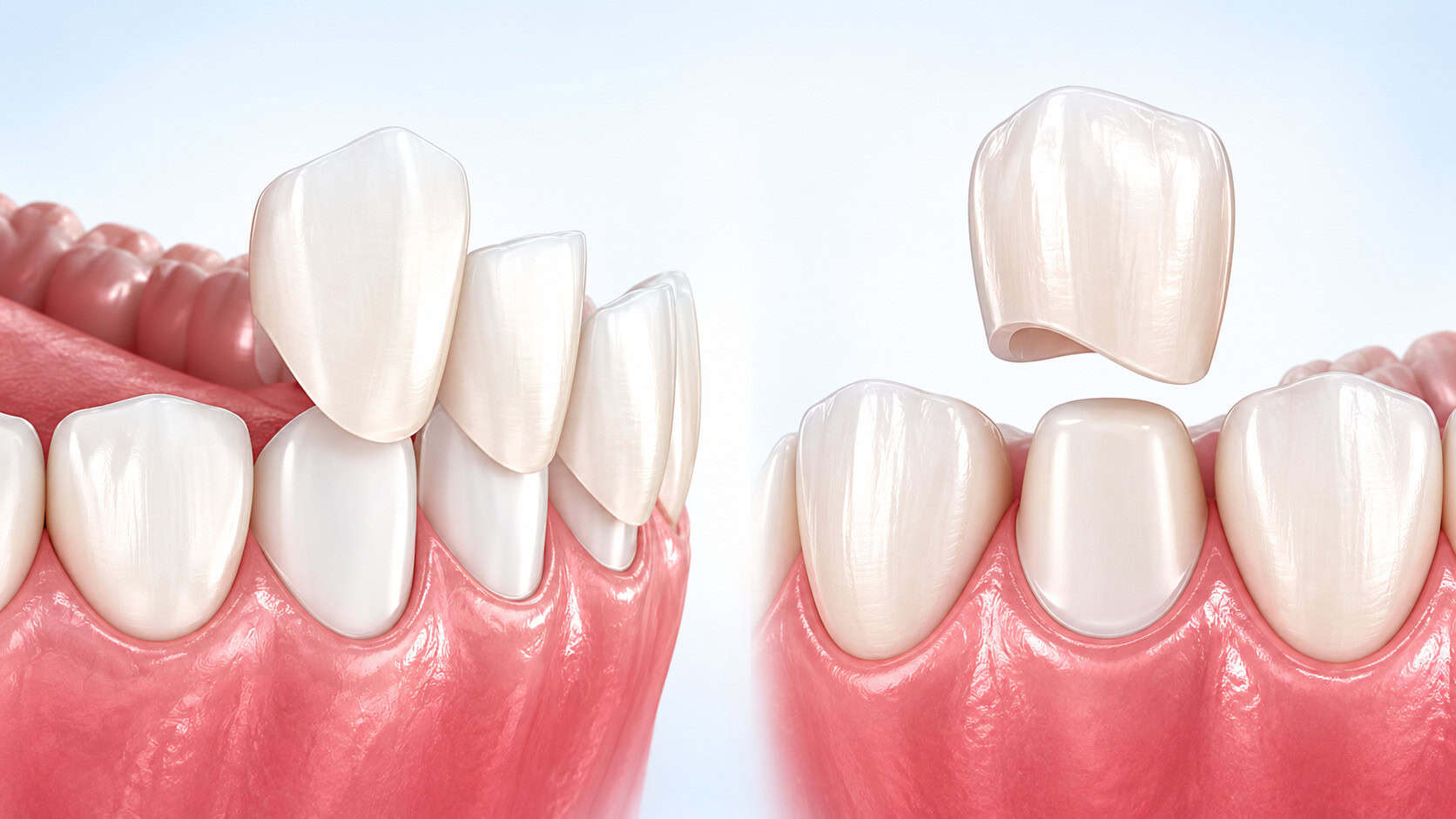
Crowns or veneers for front teeth can both improve the appearance of your smile, but they serve different purposes. Veneers are generally suitable for improving the appearance of relatively healthy teeth, while crowns are often recommended when a tooth needs more extensive restoration or protection.
Understanding the differences can help you choose a treatment that improves your smile without unnecessarily removing healthy tooth structure.
Crowns Vs. Veneers: What Is The Main Difference?
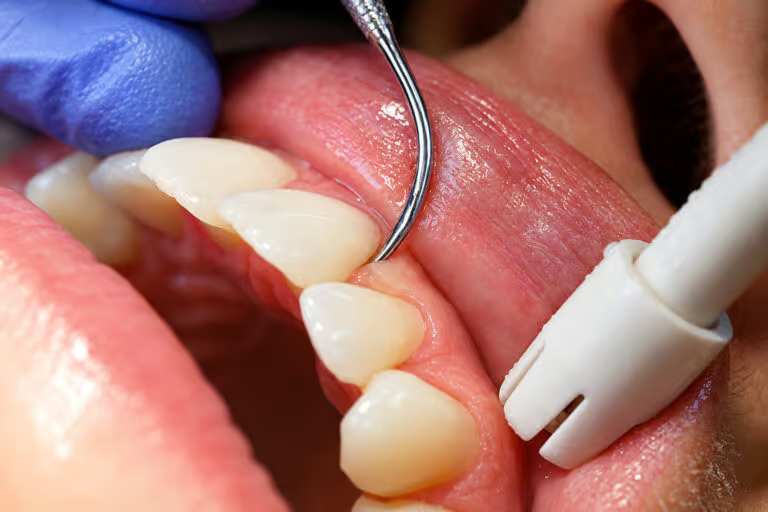
The biggest difference between a dental crown and a veneer is how much of the tooth each restoration covers. A veneer is a thin covering bonded mainly to the front surface, while a crown surrounds the visible part of the tooth.
Although both can improve colour, shape, and appearance, their clinical purposes are not identical.
| Feature | Facettes dentaires | Couronnes dentaires |
| Coverage | Mainly the front surface | Entire visible tooth |
| Main purpose | Cosmetic improvement | Restoring and protecting damaged teeth |
| Tooth preparation | Usually less extensive | Usually more extensive |
| Best suited for | Relatively healthy teeth with cosmetic concerns | Weakened, broken, or extensively restored teeth |
| Common materials | Porcelain, composite, E-Max | Ceramic, zirconia, E-Max |
| Apparence | Can closely imitate natural enamel | Can also look natural with appropriate materials |
| Reversibility | Often irreversible | Irreversible |
When Are Veneers Better For Front Teeth?
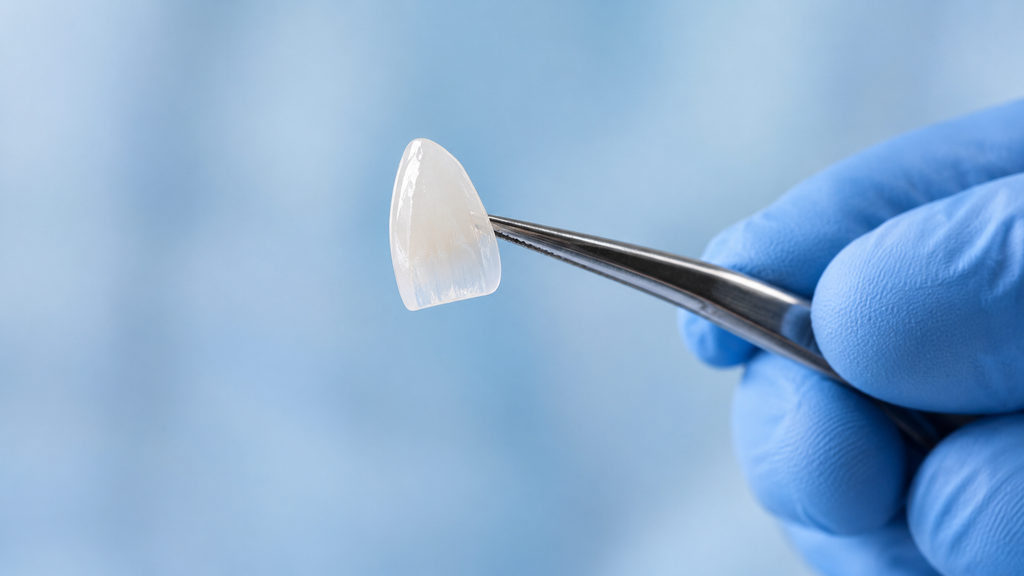
Veneers are often worth considering when the natural tooth is structurally healthy but its appearance could be improved. They allow us to change the visible surface without covering the entire tooth.
At Virtus Dental Center, our facettes dentaires are designed to address selected cosmetic concerns, including:
- Persistent discolouration that cannot be adequately corrected with whitening.
- Small chips affecting the visible edges of teeth.
- Uneven tooth lengths or proportions.
- Minor spaces between otherwise well-positioned teeth.
- Irregular shapes that affect smile symmetry.
For example, imagine a patient with two healthy front teeth that appear unusually short. Veneers might improve their proportions while preserving more natural tooth structure than full crowns.
However, veneers are not a substitute for treating significant decay, unstable teeth, or serious bite problems. We first need to determine whether the tooth is healthy enough to support a bonded restoration.
When Is A Dental Crown The Better Choice?
A dental crown becomes more relevant when the tooth needs structural restoration alongside an improvement in appearance. Because it covers the tooth more extensively, it can help rebuild teeth that have lost substantial natural structure.
At Virtus, we provide couronnes dentaires for suitable restorative and cosmetic needs.
Front Teeth With Large Fillings or Fractures
A tooth with a small surface chip may only need bonding or a veneer. However, if a large section has broken away or several surfaces contain extensive fillings, there may not be enough healthy structure to support a veneer reliably.
A crown can restore the missing contours and help protect the remaining tooth from further damage. Its suitability still depends on the amount of sound tooth structure available and the condition of the root.
Front Teeth After Root Canal Treatment
A front tooth that has undergone root canal treatment does not automatically require a crown. If the tooth retains sufficient healthy structure, a more conservative restoration may be appropriate.
When substantial structure has been lost, a crown may provide a better way to rebuild the tooth. The decision should be based on remaining tooth tissue, existing restorations, and biting forces rather than root canal treatment alone.
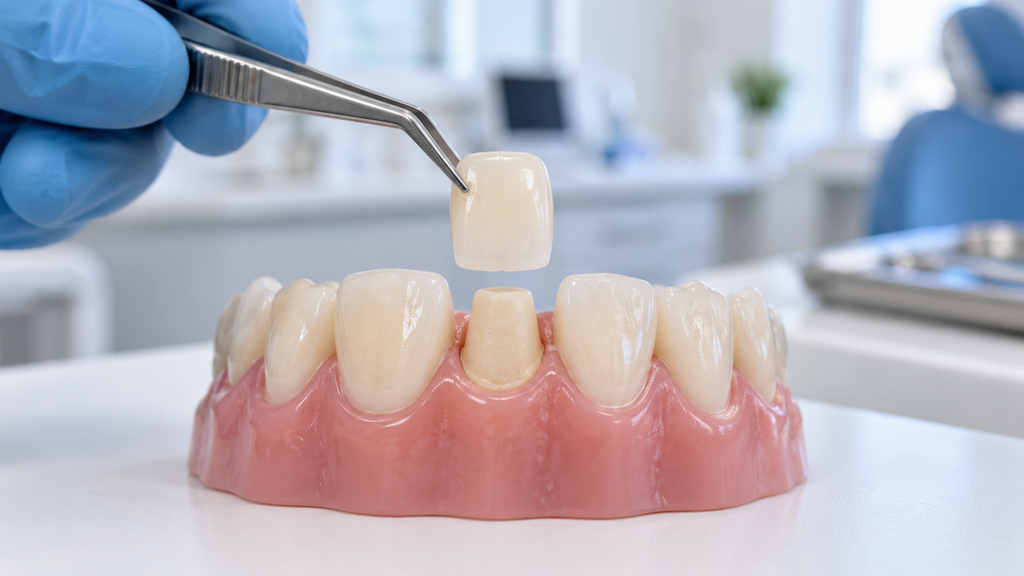
Which Treatment Preserves More Natural Tooth?
Preserving healthy tooth structure is one of the most important considerations when comparing crowns and veneers. Once tooth enamel or dentine has been removed, it cannot regenerate.
Veneer preparation generally involves removing a limited amount of enamel from the front and sometimes the edges. Certain carefully selected cases may allow minimal or no preparation, although this is not suitable for every tooth.
Crowns usually require preparation around the entire tooth to create enough space for the restoration. The amount removed varies according to the material, existing damage, and the required design.
This is why placing crowns on otherwise healthy front teeth purely for cosmetic reasons deserves careful consideration.
Do Crowns Or Veneers Look More Natural?
Both treatments can produce natural-looking front teeth when the shape, shade, and surface details are carefully designed. The result depends on more than whether you choose a crown or veneer.
Natural teeth are not completely opaque. Light passes through their enamel, creating subtle colour variations that restorative materials attempt to reproduce.
A veneer bonded to healthy enamel may preserve much of the natural tooth’s underlying appearance. A crown must recreate the visible appearance of the entire prepared tooth, making the material and design especially important.
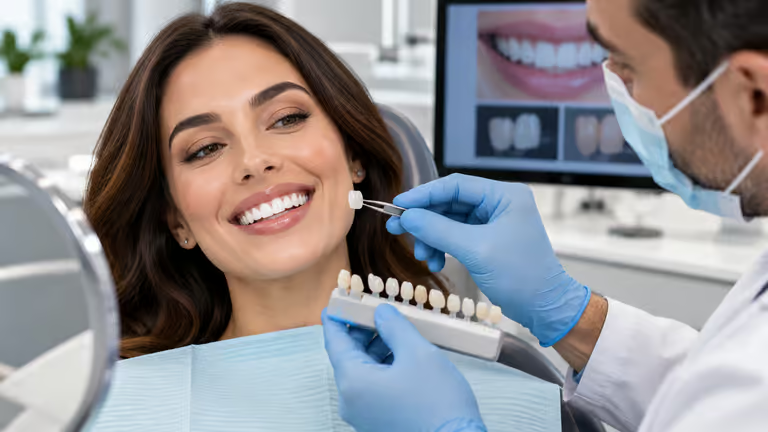
At Virtus, we consider the neighbouring teeth, smile proportions, and desired shade when planning restorations. The objective is to create a result that suits your existing teeth rather than automatically making every restoration identical.
Does the Material Affect the Final Appearance?
Yes, different restorative materials have different optical and mechanical properties. Their suitability depends on the tooth’s underlying colour, the available space, and the forces involved in biting.
Our crown options include ceramic, zirconia, and E-Max restorations. For veneers, we offer porcelain, composite, and E-Max options.
E-Max is a lithium-disilicate ceramic often selected for its aesthetic properties in appropriate cases. Zirconia may be useful when greater strength or the need to mask an underlying tooth colour influences material selection.
Neither material should be chosen solely because it sounds stronger or more advanced. The final recommendation must balance appearance, function, preparation requirements, and the individual tooth.
Can You Have Crowns And Veneers On Different Front Teeth?
Yes, some patients may benefit from combining crowns and veneers rather than using the same restoration on every front tooth. Different teeth can have different structural needs, even when they are next to each other.
For example, one front tooth might contain a large existing restoration, while its neighbour has healthy enamel but an uneven shape. A crown could be considered for the damaged tooth and a veneer for the healthier one.
The main challenge is creating consistent colour, proportions, and surface texture across the restorations. Careful planning is particularly important because the two restorations may interact differently with light.
At Virtus, our treatment planning can consider crowns and veneers together when appropriate. Each tooth should receive the restoration its condition requires, rather than following a uniform cosmetic approach.
What If You Do Not Need Either Treatment?
Not every visible imperfection requires a crown or veneer. A smaller intervention may solve the problem while leaving more of the natural tooth untouched.
For a minor chip or irregular edge, our dental bonding treatment may be an alternative. It uses tooth-coloured composite resin to repair selected imperfections, often with less extensive preparation.
If the main concern is tooth colour, blanchiment professionnel des dents may be worth considering before permanent restorations. Orthodontic treatment may be more appropriate when tooth position, rather than tooth shape, is the underlying concern.
We recommend discussing these options before committing to irreversible treatment. Choosing the least invasive suitable approach can help preserve future restorative options.
How Do We Choose Between Crowns And Veneers At Virtus?
The decision begins with examining the teeth rather than selecting a treatment from photographs. We need to understand your cosmetic goals alongside the condition of your enamel, existing fillings, gums, and bite.
During planning, we assess:
- The amount of healthy tooth structure remaining.
- Previous fillings, fractures, or root canal treatment.
- Tooth colour and the desired aesthetic changes.
- Biting forces, including signs of grinding or clenching.
- The health of the gums and surrounding tissues.
Our published restorative services include digital impressions and customized restoration design. These processes support planning, but the final choice must still be based on the clinical examination.
For international patients, we can discuss initial concerns before travelling to Albania. However, the definitive treatment plan is confirmed only after the necessary dental assessment.
Frequently Asked Questions About Crowns And Veneers
Can a Crown Match the Colour of My Natural Front Teeth?
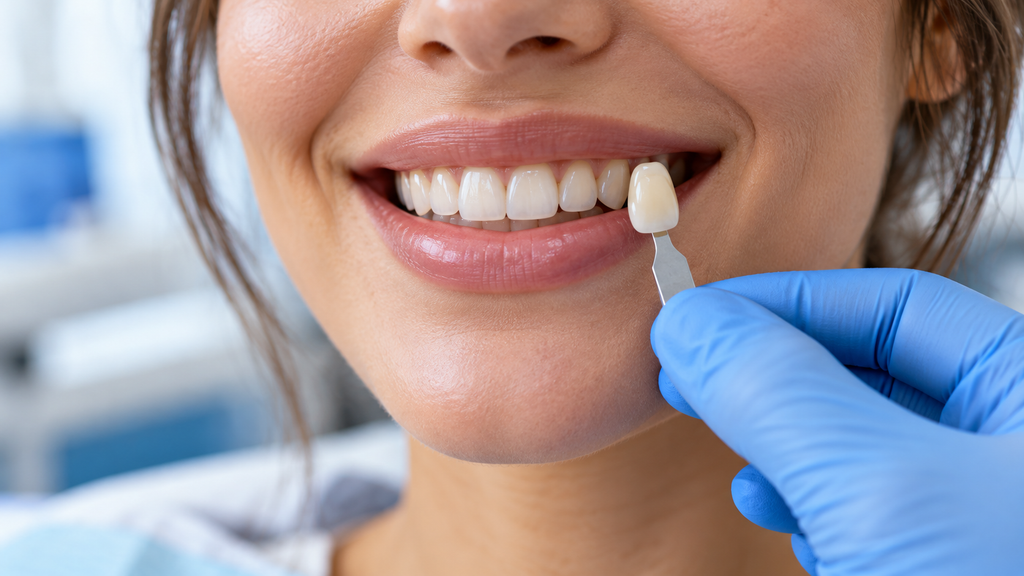
Yes, tooth-coloured crowns can be designed to blend with neighbouring teeth. The result depends on material selection, the underlying tooth colour, and the technician’s ability to reproduce natural shade variations.
Can a Veneer Be Replaced With a Crown Later?
In some circumstances, a previously veneered tooth may later require a crown because of additional damage or restorative needs. However, this is not an automatic progression, and the remaining tooth structure must be assessed before any replacement.
Can I Get a Crown or Veneer on Just One Front Tooth?
Yes, treating a single tooth is possible when appropriate. Matching one restoration to several natural teeth can be more demanding than restoring multiple teeth together, so shade selection and surface details are particularly important.
What If My Front Tooth Is Missing Completely?
A veneer or conventional tooth-supported crown cannot independently replace a missing tooth. Depending on your oral health, a dental implant with a crown or a dental bridge may be considered.
Will Crowns or Veneers Change the Way I Speak?
A new restoration can temporarily feel different against your lips or tongue, especially if the length or contour changes. If speech difficulties persist or the teeth feel unusually bulky, the dentist should examine the restoration and make appropriate adjustments.
Contact Us About Crowns Or Veneers
Not sure whether your front teeth need crowns or veneers? Contact Virtus Dental Center to discuss your concerns and arrange an assessment of the most suitable restorative options.
- 📧 Courriel : info@virtus.al
- 📞 Telephone: +355 69 27 111 66
- 📍 Lieu : Rruga Teodor Keko, Pll 29, 1027 Tirana, Albania
- 🌐 Contact us: Book Your Dental Consultation




 French
 English
 Italian
 Albanian