

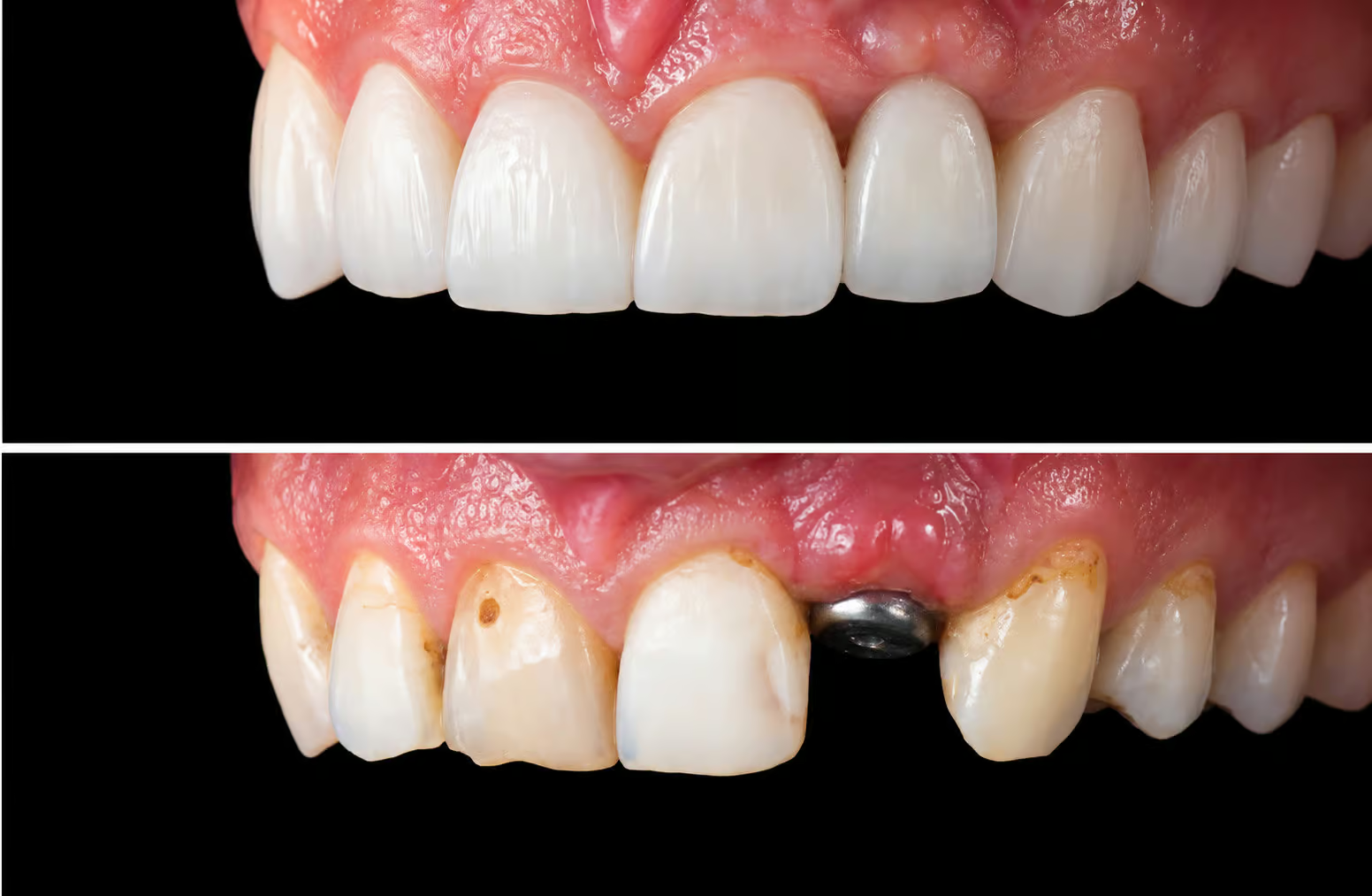
Have you been told that bone loss makes dental implants impossible? Subperiosteal implants in Albania offer an advanced alternative for patients who cannot receive traditional implants. At Virtus Dental Center, this innovative technique helps restore missing teeth with a stable and long-term solution even in complex cases.
What Are Subperiosteal Implants?
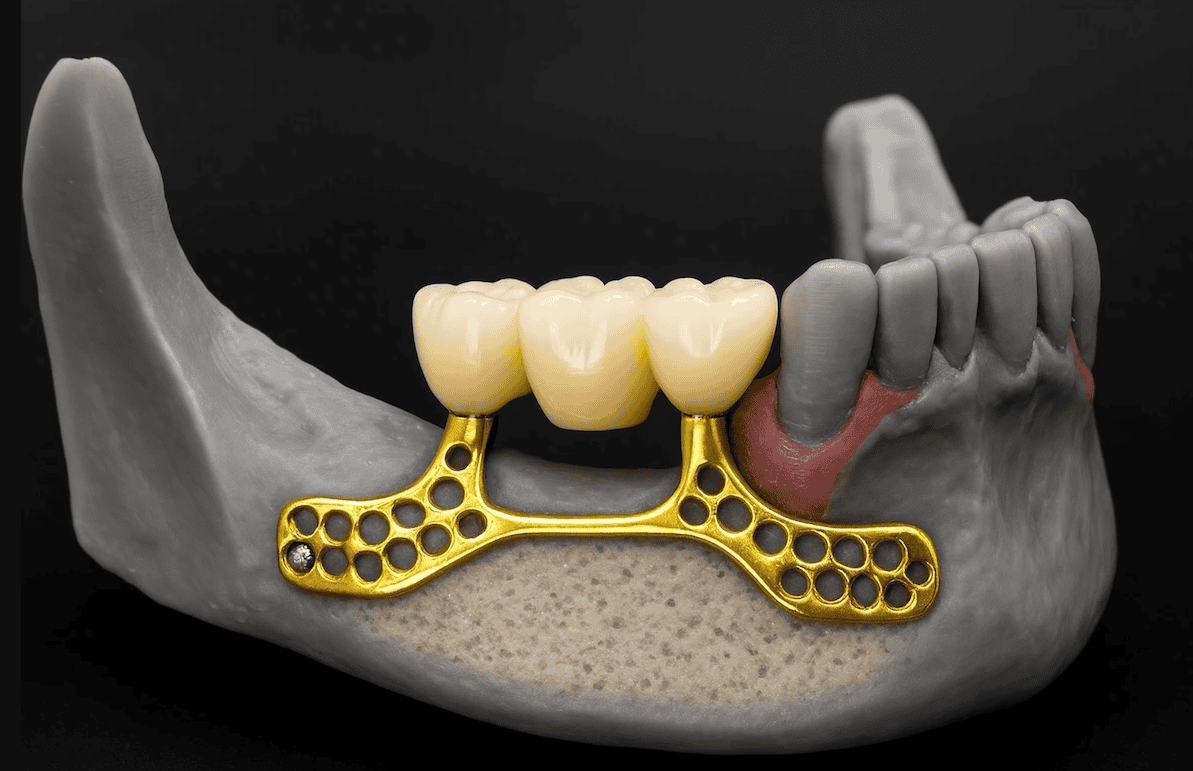
Subperiosteal implants are a special type of dental implant designed for patients with severe jawbone loss who cannot receive traditional implants. Instead of being placed inside the bone, these implants sit securely on top of the jawbone beneath the gum tissue.
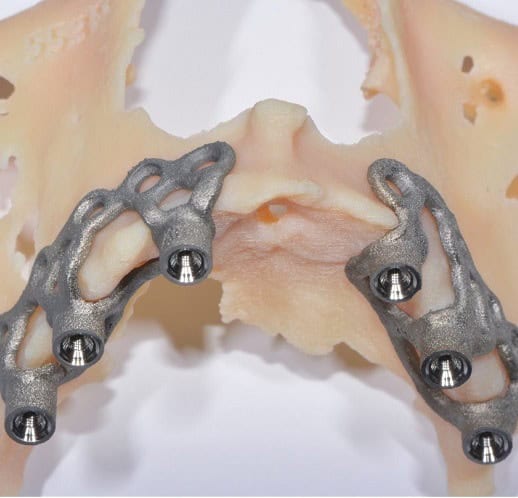
The term subperiosteal refers to their position under the gum tissue but above the bone surface. A custom-made metal framework is shaped to fit the jaw precisely, allowing it to support fixed teeth while integrating naturally with the surrounding tissue over time.
Main Characteristics:
- Custom-designed metal framework tailored to each patient’s jaw anatomy
- Sits on top of the bone rather than inside it — no bone penetration required
- Supports a full arch prosthesis or individual crowns
- No bone grafting needed
- Suitable for patients with very minimal remaining bone height or density
- A well-established technique with decades of clinical history
How Are Subperiosteal Implants Different from Traditional Implants?
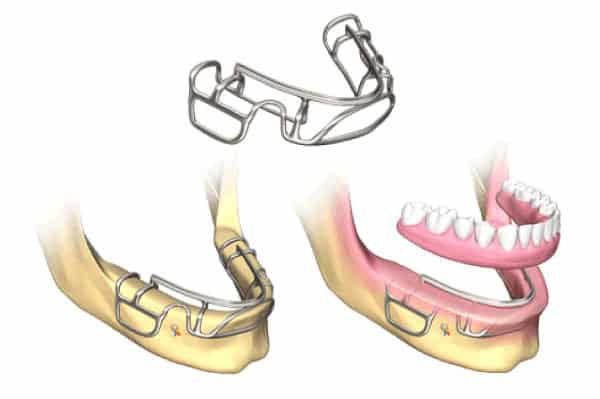
Traditional dental implants are placed directly inside the jawbone and require enough bone volume to remain stable. When bone loss is severe, these implants may not be possible without additional procedures.
Subperiosteal implants work differently, as they are positioned on top of the jawbone under the gums instead of inside the bone. Their custom-made framework spreads support across the bone surface, making them suitable for patients who cannot receive conventional implant treatments.
Why Choose Subperiosteal Implants at Virtus Dental Center?
No Bone Grafting Required
The single most important advantage of subperiosteal implants is that they do not require bone grafting. For patients with extreme bone loss, grafting would involve months of healing before any implant work could even begin — and in some cases, grafting is simply not viable.
Subperiosteal implants eliminate this step entirely, making the process:
- Faster
- Less invasive overall
- More accessible to patients with complex bone loss histories
Custom-Fitted to Your Anatomy
Every subperiosteal implant framework at Virtus Dental Center is individually designed based on precise 3D imaging of the patient’s jaw. This level of customization ensures the framework sits perfectly, distributes load evenly, and integrates properly with the surrounding tissue.
Advanced Expertise and Technology
At Virtus Dental Center, our specialized team uses:
- 3D CT imaging for accurate jaw mapping and framework design
- Digital planning tools to optimize fit and placement
- High-quality biocompatible materials (titanium alloy frameworks)
- Modern surgical equipment for precision and safety
Experienced Specialists
Internationally trained implantologists with extensive experience in complex bone-loss cases, materials, or surgical expertise.
How Does the Subperiosteal Implant Procedure Work?
Phase 1: Initial Consultation
During your first visit at Virtus Dental Center, your dentist carefully evaluates your oral health using advanced 3D scans and medical assessments. This helps determine if subperiosteal implants are suitable for your case and allows the creation of a personalized treatment plan with clear pricing.
Phase 2: Framework Design and Surgical Placement
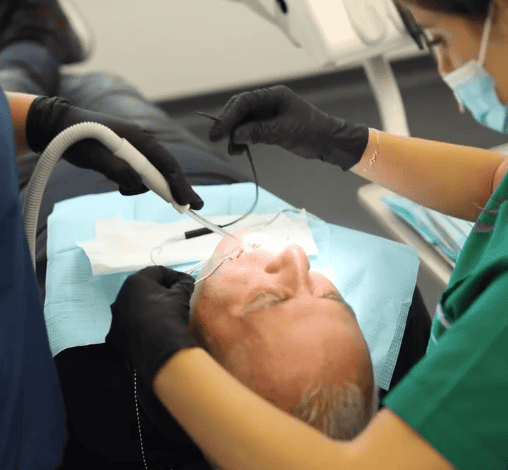
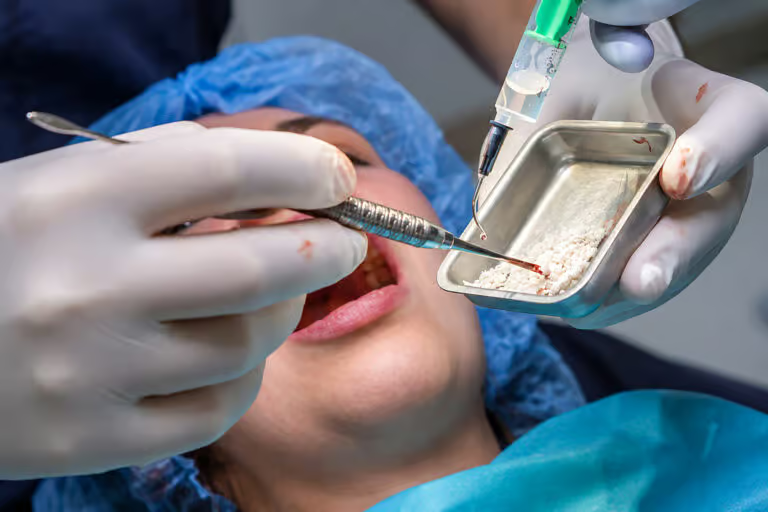
After detailed planning, a custom implant framework is created to match your jaw structure. During the procedure, performed under local anesthesia, the framework is placed gently on top of the jawbone and the gums are closed, while a temporary prosthesis is added to restore appearance and function.
Phase 3: Healing and Final Prosthesis
Over the next 3–6 months, the tissues heal and stabilize around the implant framework with regular follow-up visits. Once healing is complete, a final custom prosthesis is placed to provide a natural-looking and long-lasting result.
Aftercare
First Days (1–7 Days):
- Mild swelling, bruising, and discomfort are normal and expected
- Pain management with prescribed analgesics and cold compresses
- Rest is strongly recommended to support faster recovery
First Two Weeks:
- Soft food diet — avoid hard, sticky, or very hot foods
- Gentle oral hygiene using a soft-bristle toothbrush and antibacterial mouthwash
- Avoid smoking, as it significantly impairs healing and tissue integration
Following Months:
- Regular check-up visits at Virtus Dental Center to monitor healing and framework stability
- Careful daily hygiene to ensure long-term success
- Gradual return to a normal diet following your implantologist’s instructions
Who Are Subperiosteal Implants For?
Subperiosteal implants are the right solution for a specific group of patients. They are particularly suitable for:
- Patients with extreme jawbone atrophy where conventional implants are not possible
- Long-term denture wearers whose bone has deteriorated significantly over the years
- Individuals who have been refused implants elsewhere due to insufficient bone
- Patients for whom zygomatic or pterygoid implants are not anatomically suitable
- Those who want to avoid or cannot undergo bone grafting procedures
- People in good general health who are ready for a surgical solution
- Patients seeking a permanent, non-removable alternative to dentures
Frequently Asked Questions
Are Subperiosteal Implants Safe?
Yes. When planned and placed by experienced implantologists — as at Virtus Dental Center — subperiosteal implants are a safe and well-documented treatment option with a strong track record for patients with severe bone loss.
How Long Do Subperiosteal Implants Last?
With proper oral hygiene and regular professional maintenance, subperiosteal implants can provide a stable, long-lasting result. The framework itself is designed for durability, while the prosthesis may require adjustments or replacement over many years of use.
Is the Procedure Painful?
The surgery is performed under local anesthesia, so you will not feel pain during the procedure. Post-operative discomfort is normal and is easily managed with prescribed pain relief. Most patients find the recovery very manageable.
Can I Eat Normally After the Procedure?
A temporary prosthesis is placed after surgery to restore function during the healing period. You will start with a soft food diet and gradually return to a normal diet as healing progresses and your implantologist confirms it is safe to do so.
How Many Trips to Albania Will I Need?
Most patients complete their treatment in two visits — the first for the surgical placement of the framework, and a second visit approximately 3 to 6 months later for the placement of the final prosthesis. Our team helps you plan both trips with minimal disruption.
Who Is Not a Suitable Candidate?
Patients with uncontrolled systemic conditions such as unmanaged diabetes, active cancer treatment, or severe immune disorders may not be suitable candidates. A thorough medical and dental assessment at Virtus Dental Center will determine your eligibility before any treatment begins.
Start the Process Today
If you have been living with severe bone loss and have been told implants are not an option, Virtus Dental Center invites you to find out what is truly possible. Our team has helped patients from across Europe restore their smiles — even in the most complex cases.
Contact Virtus Dental Center
- 📞 Phone: +355 69 27 111 66
- 📧 Email: info@virtus.al
- 💬 WhatsApp: Direct message
- 🌐 Website: https://virtus.al/
Free Online Consultation
- Send photos or a panoramic X-ray of your teeth
- Describe your dental history and current situation
- Receive a personalized initial treatment plan


 English
  Italian
  Albanian
  French