

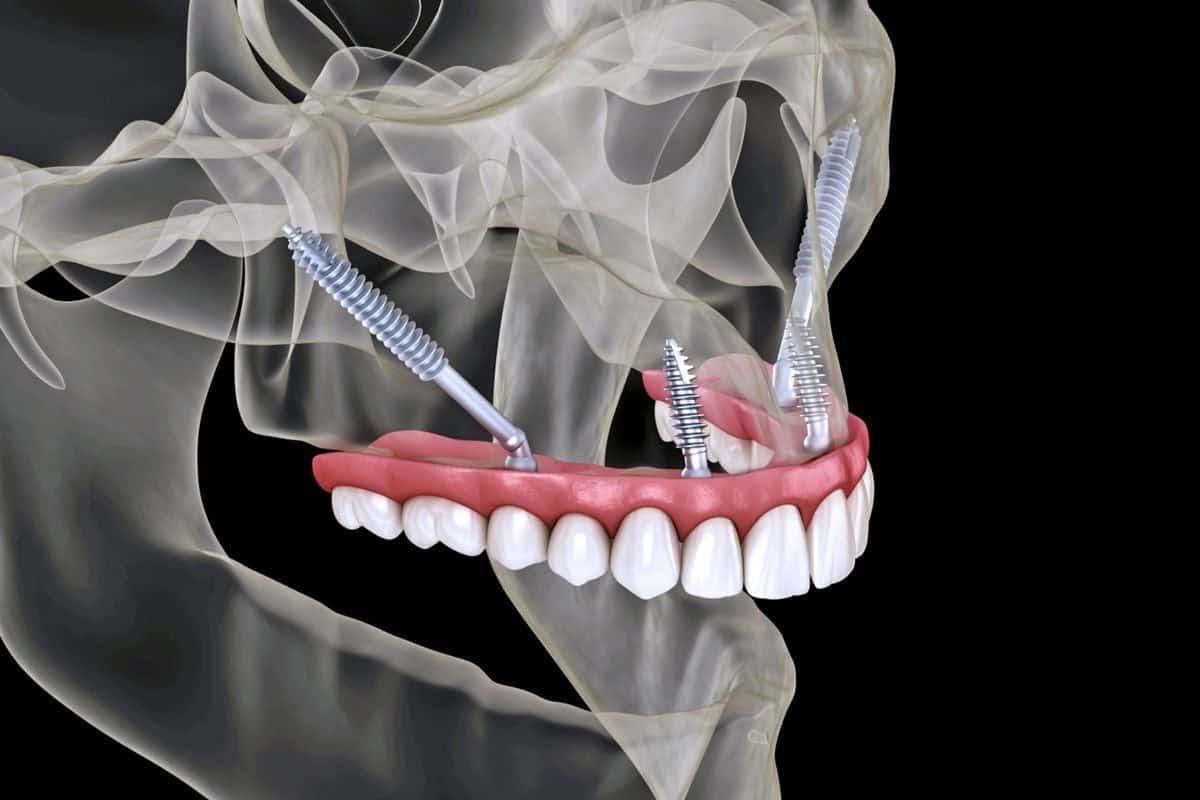
Patients who have lost a significant amount of bone volume on the upper jaw are most likely not suitable for traditional dental implants. However, this doesn’t mean they won’t be able to restore Thor’s teeth functionality and aesthetics.
Zygomatic and pterygoid implants represent the most advanced implantology technique, offering a suitable solution for patients dealing with extreme bone atrophy.
In Albania, at Virtus Dental Center, these techniques are offered at affordable prices and high international standards.
What Are Zygomatic And Pterygoid Implants?
Zygomatic implants are long implants placed at the cheekbone (zygoma), instead of the upper jaw, since it has lost a lot of volume. They offer a strong and stable base for fixed prostheses, even in cases of advanced bone atrophy.
This method avoids the need for bone grafting and allows the immediate placement of temporary teeth.
Pterygoid dental implants, on the other hand, are placed on the back area of the upper jaw in the pterygoid bone, a strong and stable structure located after the sinuses.
They are recommended when the bone in the molar area is missing or is too weak to support a traditional implant. This type of implant will significantly increase the prosthesis stability, and it is an effective alternative to several surgical procedures.
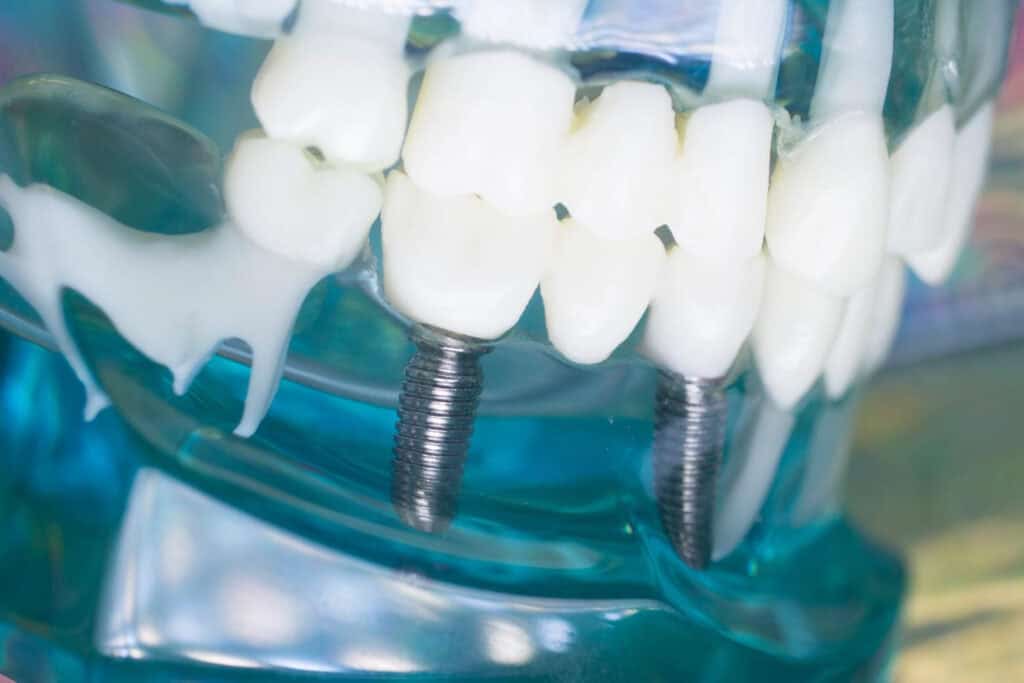
When Are These Types Of Implants Necessary?
Zygomatic implants are necessary when the patient has lost a considerable amount of upper jawbone and is not suitable for traditional implants.
This usually happens after long periods of missing teeth, such as after the loss of upper teeth or the long-term use of a removable prosthesis that causes bone resorption.
Pterygoid implants are recommended in cases when the bone is missing in the upper molar area, making implant placement impossible.
They are necessary for patients who are looking for a full mouth reconstruction without the need for additional procedures such as sinus lift or bone grafting. They are the ideal solution for those who are looking for a safe, complication-free treatment.
Zygomatic And Pterygoid Implant Procedure In Albania
Initial consultation and 3D examination
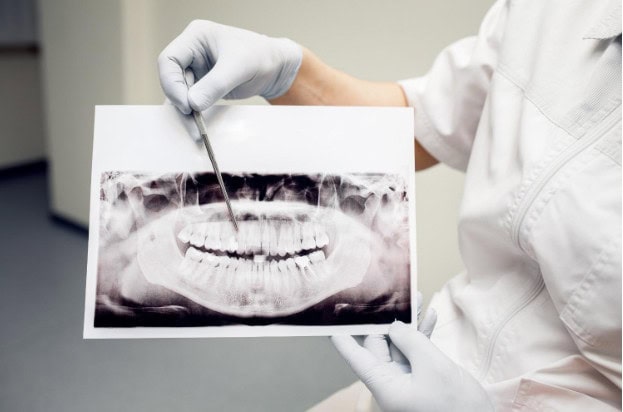
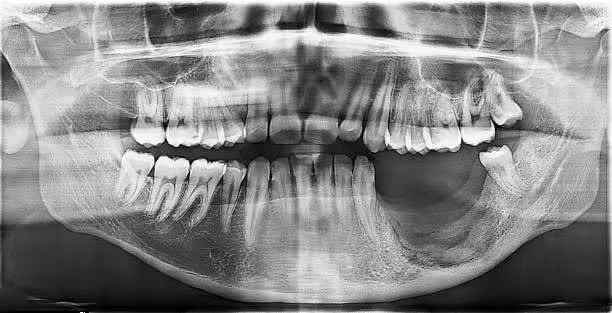
The patient will go through a detailed consultation and 3D examination to assess the bone volume and the suitability for zygomatic or pterygoid implants.
Personalized treatment planning
Based on the examination findings, a detailed treatment plan will be designed, including the number and the position of the implants that will be placed.
Surgical placement of the implants
The procedure will be performed in sterile conditions by specialized oral surgeons. The implants will be either placed in the zygoma or pterygoid bone, depending on the procedure, with the use of local anesthesia or sedation, depending on the need.
The placement of temporary teeth
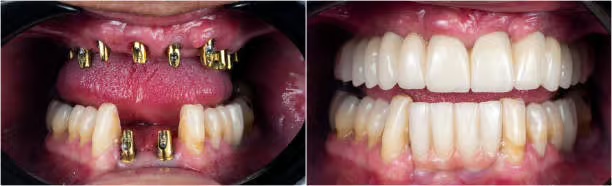
In most cases, the patient will leave the clinic with temporary teeth placed over the implants on the same day.
The control and final phase
After a few months, when the implants have fully integrated with the bone, the final personalized teeth will be placed. They look the same as natural ones and offer the same functionality.
The Main Benefits Of Zygomatic And Pterygoid Implants
The Main Benefits Of Zygomatic Implants
- Don’t require bone grafting, even in cases of extreme bone loss of the upper jaw.
- Faster tooth placement, often with implantation and a temporary denture on the same day.
- Shorter total treatment time, without the need for a long recovery time.
- Immediate restoration of the chewing function and teeth appearance.
- High stability thanks to the placement in the cheekbone (zygoma), which is highly resistant.
The Main Benefits Of Pterygoid Implants
- Ideal for the back area of the upper jaw when there is not enough jawbone.
- It will avoid the need for a sinus lift or other additional procedures.
- Offer a strong base for fixed prosthesis, especially for full mouth reconstructions.
- Improve the distribution of chewing force, providing long-term stability.
- Reduce the total number of necessary implants, covering a wider surface.
Why Choose Virtus Dental Center For These Advanced Treatments?
Virtus Dental Center is one of the most specialized clinics in Albania for zygomatic or pterygoid implants, offering high treatment standards for patients with severe bone loss.
Our oral surgeons have the right experience for these complicated implantology techniques and use the latest technologies, such as 3D scans or other digital devices, for precise placement of the implants. This will significantly reduce the risk of complications and increase the success rate.
Patients will benefit from personalized treatment plans, professional care, and regular follow-up after the procedure, in order for the final result to be long-lasting and aesthetically pleasing.
When compared to international clinics, Virtus Dental Center offers the same quality at a much lower cost, making Albania a trustworthy destination for high-quality dental treatments.
After-Care And Recovery
After the placement of zygomatic or pterygoid implants, the patient should follow some simple after-care instructions to offer a fast and successful recovery.
The first days after the procedure, it is important to avoid hard and hot foods. A soft food diet is recommended, and also the use of prescribed medications from the surgeon for easing pain and possible inflammation.
Oral hygiene should be simple but careful in the treated area. Rinsing the mouth with an antiseptic solution and avoiding direct contact with the toothbrush on the treated area are necessary after the first few days.

Regular check-ups are necessary for monitoring implant integration and the condition of the gums. After a few months, the implants will have fully integrated with the bone, and the final prostheses will be placed.
The healing process is individual, but in most cases, the patients will be able to return to their everyday activities within a few days, while full recovery will take 3–6 months.
Do These Techniques Have Limitations For Some Patients?
Yes, and even though zygomatic and pterygoid implants are ideal solutions for complex cases, they are not suitable for every patient.
Patients with severe chronic disorders, such as uncontrolled diabetes, heart disorders, or severe blood-clotting disorders, most likely won’t be the ideal candidates for such surgical procedures. Also, people who smoke or those with poor oral hygiene will have a higher risk of dealing with complications or implant failure.
The decision to use these techniques is always made after detailed medical evaluations and imaging analyses. If the conditions are not suitable, the surgeon will recommend other safe alternatives.



 English
  Italian
  Albanian
  French