

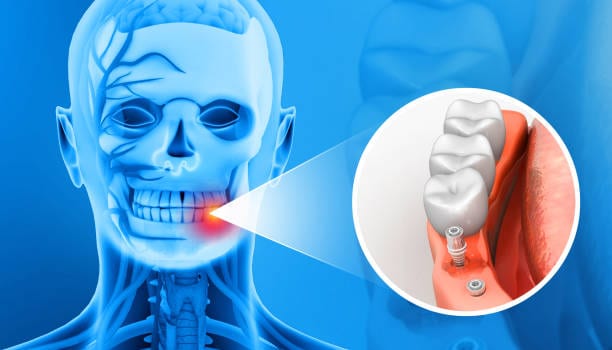
Treatment Options for Severe Jawbone Atrophy include advanced implant procedures designed for patients who lack sufficient bone for standard implants and need specialized solutions to restore function and stability. At Virtus Dental Center, these treatments are carefully planned to securely place implants even in cases of advanced jawbone loss.
What Is Jawbone Atrophy?
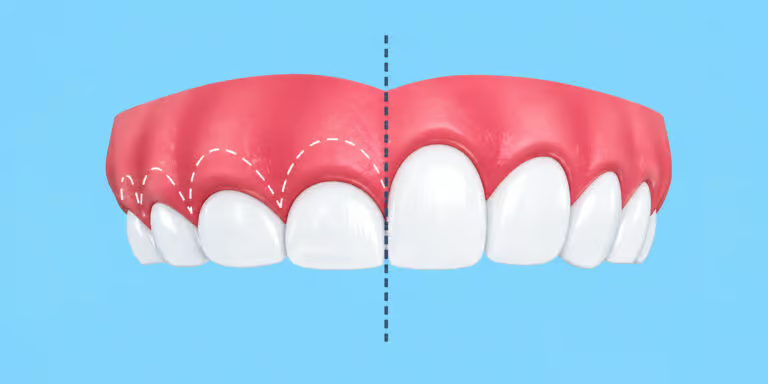
Jawbone atrophy is a condition where the bone that supports the teeth progressively decreases and weakens. This is one of the most serious conditions in modern dentistry, and it directly affects the possibility of getting dental implants.
When we lose our teeth, the bone that surrounds them starts to resorb because it lacks stimulation from the tooth roots. As time passes, this can lead to a dramatic loss of bone quality and volume.
Common Causes Of Jawbone Atrophy

Understanding the cause of jawbone atrophy helps in better prevention and treatment.
Tooth loss:
- Once a tooth is lost, the resorption process starts
- 25% of the bone width is lost in the first year
- 40-60% can be lost within three years
- The longer you wait, the more severe the atrophy
The use of removable dentures:
- Detnures add pressure on the gum line
- This speeds up the bone loss underneath
- Older dentures that dont fit anymore are more problematic
- Up to 0.5mm of bone per year can be lost
Periodontal disorders:
- Infections can destroy the supportive bone
- Advanced periodontitis causes considerable loss
- The damage can be irreversible
Trauma or accidents:
- Jaw fractures can damage the blood supply
- Serious injuries affect the bone’s ability to regenerate
- Previous surgeries may have removed bone
Medical conditions:
- Osteoporosis weakens all bones, including the jaw
- Diabetes affects bone healing
- Some medications (bisphosphonates) affect bone metabolism
How Is Severe Jawbone Atrophy Diagnosed?
Correct assessment is the first step towards a successful treatment.
Clinical examination:
- The dentist assesses the height and width of the bone
- Checks the quality of the gums and support
- Notices changes in facial structure
- Tests the stability of existing dentures
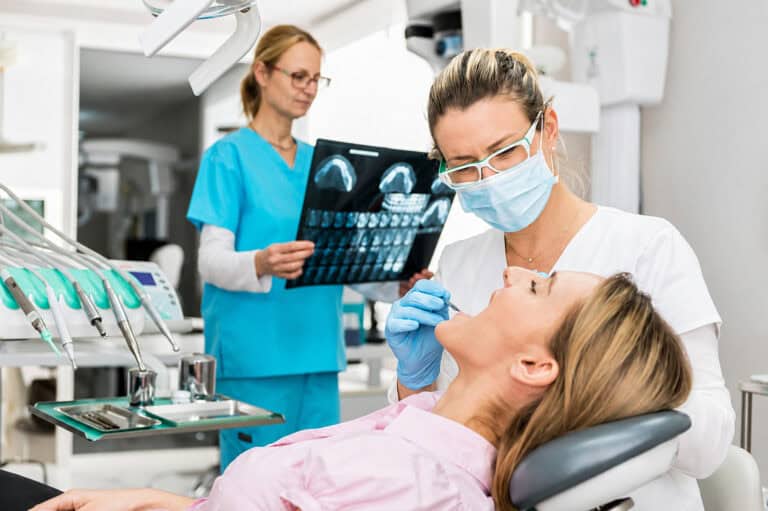
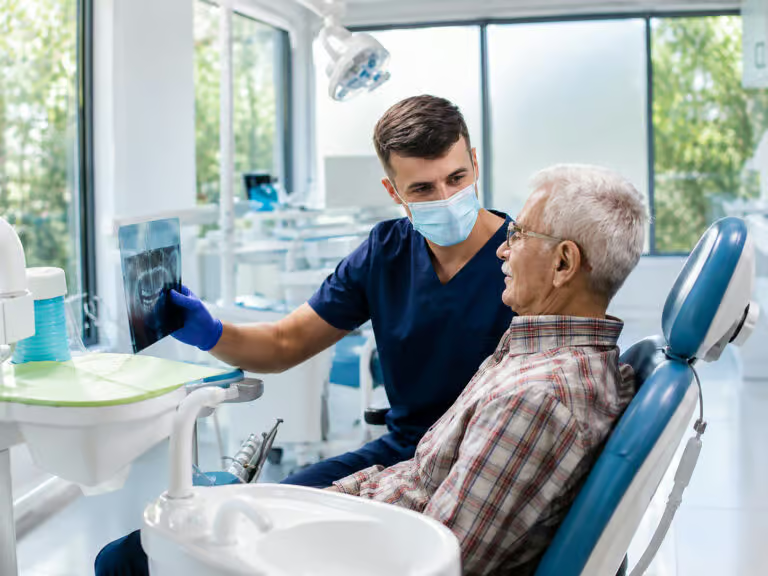
Diagnostic images:
- Panoramic radiography provides an overall view
- 3D CT Scan enables accurate volume measurements
- CBCT (Cone Beam) is the gold standard for planning
- 3D scanning allows for preoperative treatment simulation
Classification of atrophy:
- Mild jawbone atrophy: minimal loss, easily treated
- Moderate jawbone atrophy: requires advanced techniques
- Severe jawbone atrophy: requires complex procedures
- Extreme jawbone atrophy: requires specialized solutions
Treatment Options For Severe Jawbone Atrophy

For the most extreme cases of jawbone atrophy, we offer several proven treatment options that offer a solution.
Zygomatic Implants
Zygomatic implants are a revolutionary solution for patients with severe jawbone atrophy on the upper jaw.
How do they work:
- The implants are placed on the zygoma bone (cheekbones)
- They are longer than traditional implants (30-35mm)
- Offer amazing stability immediately
Advantages:
- No bone grafting required in most cases
- A single-phase procedure
- Temporary implants can be placed within a day
- Over 95% of success rate
- Long-term and stable solution
Who are they suitable for:
- Patients with severe upper jawbone atrophy
- Previously failed bone grafting procedures
- Patients looking for a quick solution
- Patients with health conditions that make bone grafting impossible
Pterygoid Implants
Pterygoid implants use the pterygoid bone located on the back of the upper jaw.
Characteristics:
- Placed on the pterygoid bone (behind the cheekbones)
- Length 15-20mm
- They are often combined with traditional implants
- Offer amazing posterior support
Advantages:
- Avoid areas with severe atrophy
- Are placed in a stronger area of the face
- Avoid contact with the maxillary sinus
- Can be easily combined with other techniques
When are they recommended:
- In severe cases of jawbone atrophy in the upper posterior area
- As reinforcement for zygomatic implants
- When bone grafting is not an option
- For additional stability in cases of full mouth reconstructions

Subperiosteal Implants
Subperiosteal implants are an alternative solution that doesnt require a lot of bone length.
How do they work:
- They are placed over the bone, underneath the gums
- A customized metal frame rests on the bone
- The posts protrude through the gums to support the prosthesis
- They are scanned with 3D technology for a perfect fit
Unique characteristics
- Is not placed inside the bone as other implants
- Personalized for each jaw
- It is supported by the entire available bone surface
When are they considered:
- Extremely low bone height
- When other implants are not possible
- Patients who cannot undergo bone grafting
- Solution for very complex cases
Disadvantages:
- Less used nowadays (zygomatic implants are more preferred)
- Require careful maintenance
- There may be complications with the gums
- Lower success rate than modern endosteal implants
Comparing Techniques: Which Is Best For You?
The choice of treatment depends on several individual factors.
Time factor:
- Fastest option: Zygomatic implants (teeth placed within days)
- Medium timeframe: Pterygoid implants (3–4 months)
- Longest option: Transnasal grafts (6–9 months plus implants)
Level of invasiveness:
- Least invasive: Pterygoid implants
- Moderately invasive: Zygomatic implants
- Most invasive: Transnasal and subperiosteal grafts
Success rate:
- Zygomatic implants: 95–98%
- Pterygoid implants: 92–96%
- Transnasal grafts: 85–92%
- Subperiosteal implants: 75–85%
Cost:
- Subperiosteal and pterygoid implants: Moderate
- Zygomatic implants: Higher
- Transnasal grafts: Higher (two-stage procedure required)

Post-Operative Care For Maximum Success
Following the instructions is essential for excellent results.
First 24 hours:
- Complete bed rest with the head elevated
- Cold compresses to reduce swelling
- Cold and liquid foods only
- Take all medications exactly as prescribed
- Do not touch or disturb the surgical area
First week:
- Soft diet (soups, purées, smoothies)
- Avoid hard and hot foods
- Gentle but careful oral hygiene
- Rinse with salt water or a recommended oral solution
- Do not smoke (very important)
Following months:
- Attend all follow-up appointments
- Report any discomfort immediately
- Maintain excellent oral hygiene
- Avoid excessive load on the implants
- Be patient – healing takes time
Why Choose Virtus Dental Center For Jawbone Atrophy?
Virtus Dental Center offers the expertise and advanced technology required to successfully treat even the most complex cases.
Specialized expertise:
- Surgeons with international training
- Extensive experience with all advanced techniques
- Hundreds of successful severe jawbone atrophy cases
- Continuous training in the latest treatment methods
Modern technology:
- High-resolution 3D scanners
- Advanced surgical planning software
- Top-quality materials and instruments
- Surgical facilities meeting international standards
Individual approach:
- Comprehensive and personalized evaluation
- Clear explanation of all treatment options
- Full transparency in costs
- 24/7 support during recovery
- Guarantee for the performed treatment

Frequently Asked Questions
Am I Too Old For Dental Implants?
Age is not an issue for dental implants if you are healthy. Patients over 80 years old can also have successful implants if the dental surgeons consider them suitable for the treatment.
How Long Do Dental Implants Last For Patients With Severe Jawbone Atrophy?
With the right care, dental implants can last a lifetime. Studies show a 90%+ success rate even after 10 years, making the investment worth it.
Are Complex Implant Procedures Painful?
The use of advanced anesthesia makes the implant procedure totally pain-free. Discomfort after the surgery can be easily managed with pain-killer medications.
What Happens If I Dont Treat Severe Jawbone Atrophy?
The conditions continue to worsen, becoming more difficult to treat, and the risk of complications increases.





 English
  Italian
  Albanian
  French