

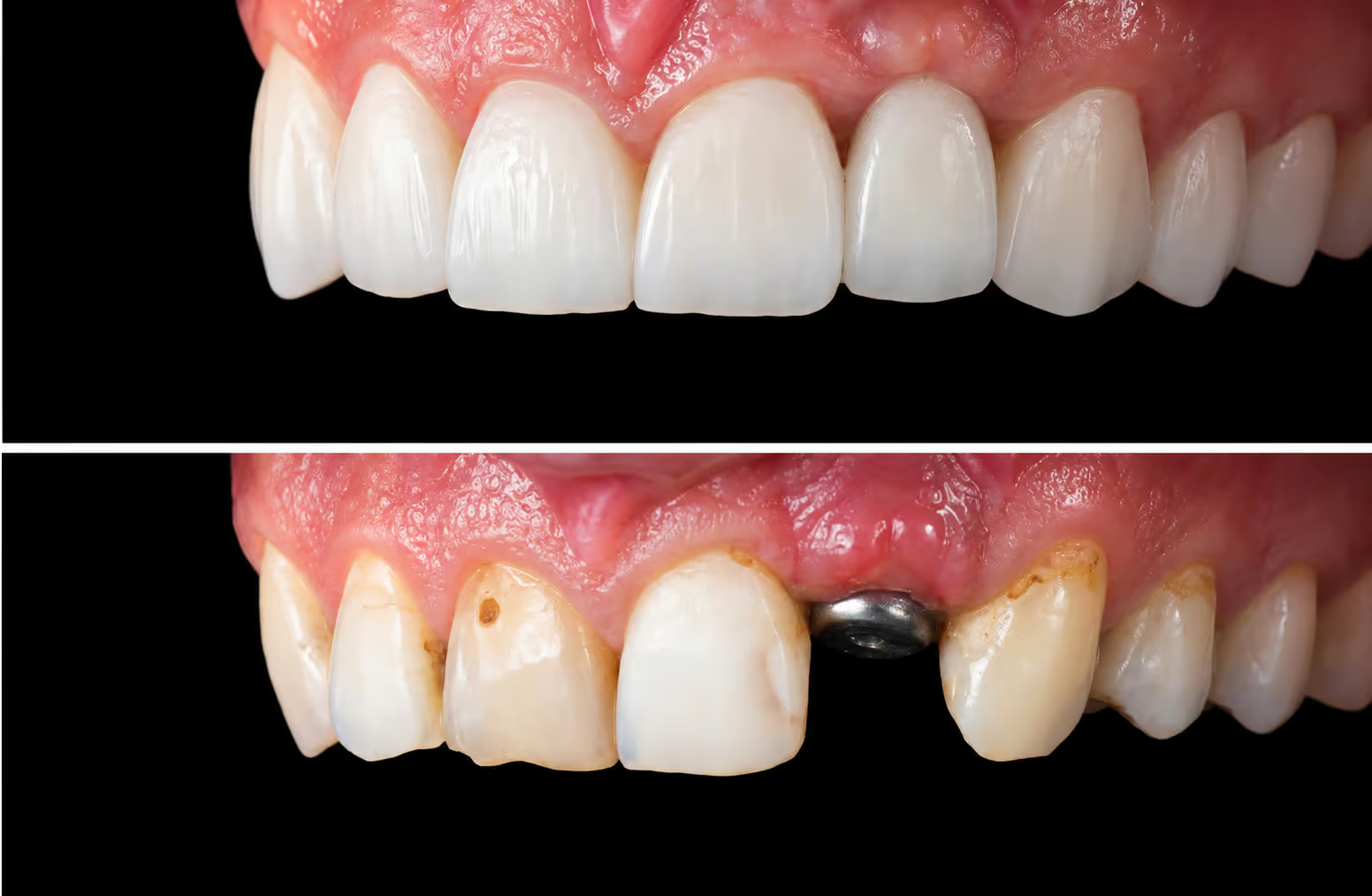
Understanding the dental implant healing stages can make the treatment feel less stressful. Swelling, sensitivity, and changes around the implant are normal at certain times. However, patients should also know which symptoms require a dental check-up.
Quick Answer: How Does A Dental Implant Heal?
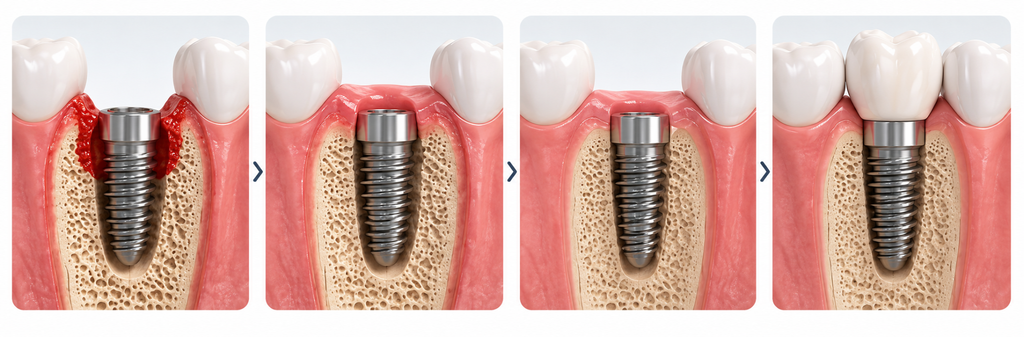
Dental implant healing happens in several stages. During the first few days, the gum begins to recover from surgery. Swelling, mild bleeding, and discomfort should gradually decrease.
Over the following weeks and months, the implant connects with the surrounding jawbone. This process is called osseointegration. Once the implant is stable and the gums are healthy, the dentist can prepare the final crown or fixed bridge.
The complete healing period often takes between three and six months. However, it may be shorter or longer depending on the implant position, bone quality, overall health, and whether an additional procedure was needed.
What Is Dental Implant Healing?
A dental implant is placed inside the jawbone to replace the root of a missing tooth. After surgery, both the gum and the bone must heal around it.
The gum normally heals faster than the bone. It may look closed after a few weeks, but the implant can still be integrating underneath.
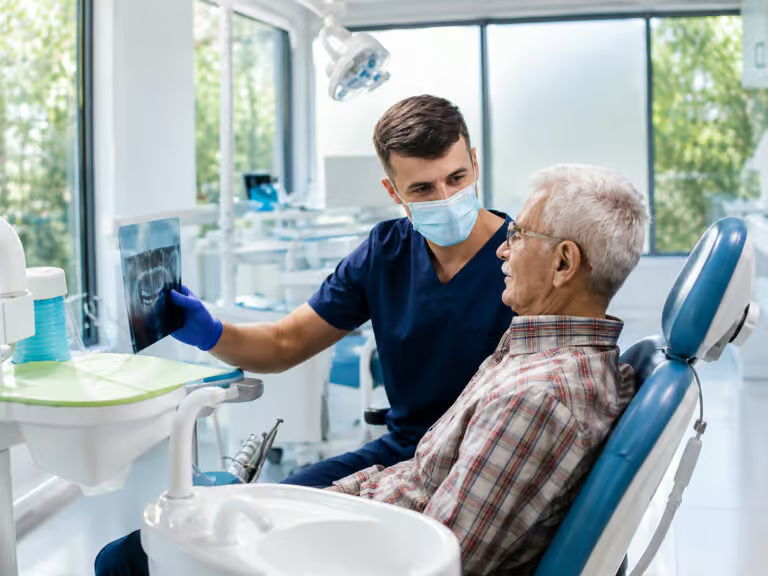
This is why patients should not judge implant healing only by how the gum looks. The dentist must check the implant before placing the final restoration.
Who Is Dental Implant Treatment Suitable For?
Dental implants in Albania may be suitable for patients who have one missing tooth, several missing teeth, or an entire missing dental arch.
Good candidates usually have healthy gums, controlled general health, and enough bone to support an implant. Patients with limited bone may first require bone grafting or a different implant solution.
Smoking, uncontrolled diabetes, active gum disease, poor oral hygiene, and certain medicines can affect healing. These factors do not always make implants impossible, but they must be discussed during the consultation.
How Does Dental Implant Treatment Work?
First Appointment
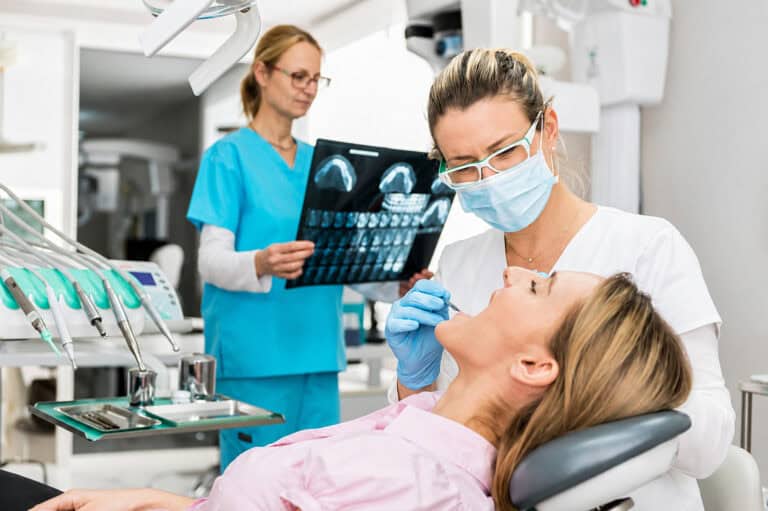
The first appointment includes an examination of the teeth, gums, bite, and medical history. Dental X-rays or a CBCT scan may be used to check bone height, width, and quality.
The dentist then decides which implant technique is suitable and whether damaged teeth, infections, or gum problems must be treated first.
Implant Placement
The implant is placed into the planned area under local anaesthesia. The gum may be closed over the implant or fitted with a small healing component.
During the first days, the body begins repairing the gum and bone around the site. The implant should be protected from uncontrolled chewing pressure while this happens.
Final Restoration
When healing is complete, the implant is checked for stability. Digital impressions can then be taken to design the final crown, bridge, or full-arch restoration.
The final teeth are adjusted to fit the bite. Patients also receive instructions for cleaning around the implant and protecting the new restoration.
How Long Does Dental Implant Healing Take?
| Healing stage | What you may experience |
| First 24–72 hours | Swelling, mild bleeding, tenderness, and sensitivity |
| First week | Swelling begins to reduce and the gum starts closing |
| 1–2 weeks | Stitches may be removed or dissolve; discomfort should be limited |
| 2–6 months | The implant gradually integrates with the jawbone |
| Final stage | The implant is checked and the permanent restoration is prepared |
These times are general. Bone grafting, sinus lift surgery, multiple implants, and health conditions can extend the treatment period.
Benefits Of Allowing A Dental Implant To Heal Properly
A controlled healing period helps the implant develop stable support inside the jawbone. It also allows the gums to form a healthy seal around the implant.
Proper healing can:
- Improve implant stability
- Protect the surrounding bone
- Reduce the risk of infection
- Support comfortable chewing
- Create healthier gums around the final crown
- Help the restoration last longer
Rushing the final restoration before the implant is ready may place unnecessary pressure on the healing area.
Immediate Loading Vs Traditional Implant Healing
Traditional implant treatment normally allows the implant to heal before it supports a dental crown or bridge. A temporary removable tooth may be used during this period.
With immediate-loading implants, temporary fixed teeth may be attached soon after surgery. This is especially useful for patients replacing several teeth or a complete arch.
Immediate loading does not remove the healing stage. The implants still need time to integrate with the bone beneath the temporary teeth. The permanent bridge is normally fitted after healing.
Not every patient is suitable for immediate loading. The decision depends on implant stability, bone quality, bite pressure, and the design of the temporary restoration.
Recovery And Aftercare
Follow the instructions provided by the dental team, even if the implant area feels comfortable.
During recovery:
- Eat soft foods and avoid chewing directly over the implant.
- Brush carefully and keep the mouth clean.
- Use prescribed medicine exactly as instructed.
- Avoid smoking because it can slow healing.
- Do not touch the area with your fingers or tongue.
- Avoid intense exercise during the first days.
- Attend every scheduled check-up.
Contact the clinic if pain or swelling becomes worse instead of better. Persistent bleeding, fever, pus, a bad taste, gum recession, or movement around the implant also requires professional assessment.
How Long Do Dental Implant Results Last?
A well-integrated implant can remain functional for many years. Its lifespan depends on gum health, oral hygiene, bite pressure, smoking habits, and regular dental care.
The crown or bridge placed over the implant may wear sooner than the implant itself. It can sometimes require repair or replacement while the implant remains stable.
Daily cleaning and professional check-ups are essential. Full-arch bridges also need careful cleaning underneath to prevent plaque from building up around the implants.
Dental Implant Treatment In Albania For International Patients
International patients should ask how many trips are required and what will happen during each visit. The first trip may include examinations, extractions, implant placement, and temporary teeth. The final restoration may require another visit after healing.
Virtus Dental Center supports patients through consultation, treatment planning, recovery, and follow-up. Its dental tourism service in Albania also helps patients understand the travel schedule before booking.
Recent panoramic X-rays, CBCT scans, medical information, and clear photographs can be sent for an initial online assessment. The final plan is confirmed after an examination at the clinic.
Frequently Asked Questions
Is Swelling Normal After Dental Implant Surgery?
Yes. Mild or moderate swelling is common during the first few days. It should begin to decrease gradually. Swelling that becomes worse or appears with fever should be checked.
How Do I Know If the Implant Is Integrating?
Osseointegration cannot be confirmed at home. The dentist checks healing, gum condition, and implant stability before approving the final restoration.
Can I Chew Normally During Healing?
You should avoid strong pressure over the implant during the early healing period. Patients with temporary fixed teeth must also follow a soft-food diet until the dental team allows firmer foods.
When Should I Contact the Clinic?
Contact the clinic if you notice increasing pain, continuous bleeding, pus, fever, unusual swelling, or movement of the implant or temporary teeth. Early assessment can prevent a small problem from becoming more serious.

Conclusion
Dental implant healing continues long after the first swelling has disappeared. The gum may recover within weeks, while the bone usually needs several months to form stable support.
Following aftercare instructions and attending check-ups gives the implant the right conditions to heal before the permanent teeth are placed.
Start Your Dental Implant Journey At Virtus 🦷✨
Do not let missing teeth continue to affect your eating, speech, or confidence. Virtus Dental Center provides personalized implant planning, advanced solutions, temporary teeth when suitable, and continuous assistance for international patients.
- 📲 Call or WhatsApp: +355 69 271 1166
- 📧 Email: info@virtus.al
- 🌐 Website: www.virtus.al
- 📍 Location: Seksioni B, Rruga Teodor Keko Pll 29, Tiranë 1027, Albania
Send your dental X-rays or photographs today and receive an initial consultation for your new smile. 😊




 English
  Italian
  Albanian
  French