


The first week with braces is usually the biggest adjustment period. Your teeth may feel sensitive, and the brackets can rub against your cheeks or lips. Knowing what to eat and how to clean your braces can make these first days much easier.
Quick Answer: What Should You Expect During The First Week?
Mild soreness and pressure are normal after braces are placed. The discomfort is often stronger during the first 24 to 48 hours and should gradually improve over the following days.
Soft foods will make eating more comfortable. You will also need to brush carefully because food can become trapped around the brackets and wires.
By the end of the first week, most patients feel more comfortable speaking, eating, and following their new cleaning routine.
What Are Traditional Braces?
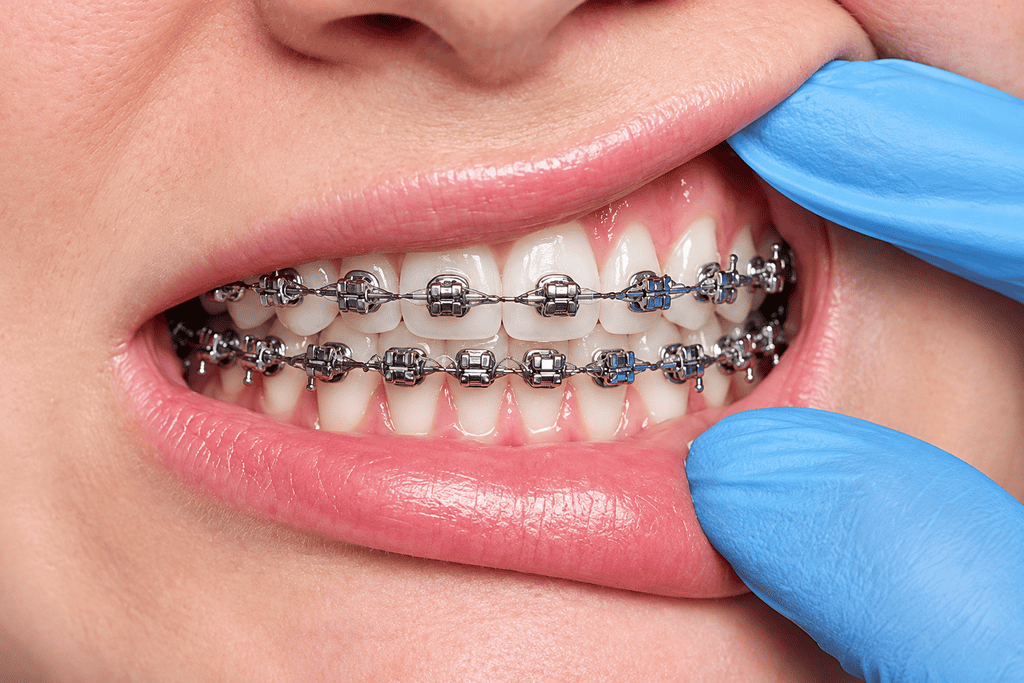
Traditional braces use small metal attachments fixed to the teeth and connected by a wire. The wire applies controlled pressure that gradually moves the teeth into better positions.
Braces can correct crowded teeth, gaps, rotations, and different bite problems. Treatment can improve both the appearance of the smile and the way the upper and lower teeth meet.
The braces are fixed in place, so patients cannot remove them during meals or cleaning. This makes daily care especially important.
Who Are Braces Suitable For?
Traditional braces in Albania may be suitable for children, teenagers, and adults. They can be used for both simple alignment problems and more complex bite corrections.
They may be recommended when a patient has:
- Crowded or overlapping teeth
- Large gaps between teeth
- Teeth growing in the wrong position
- An overbite, underbite, or crossbite
- A bite that affects chewing
- Tooth positions that are difficult to clean
A dental examination and X-rays may be needed before treatment. Cavities and active gum problems should normally be treated before the braces are placed.
How Does Treatment With Braces Work?
First Appointment
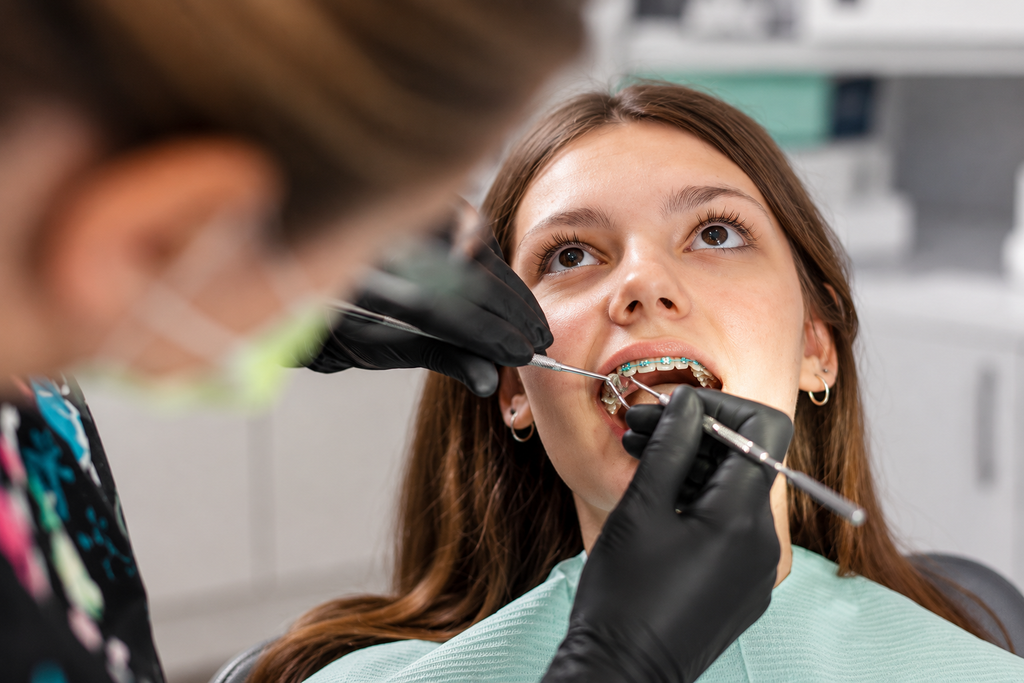
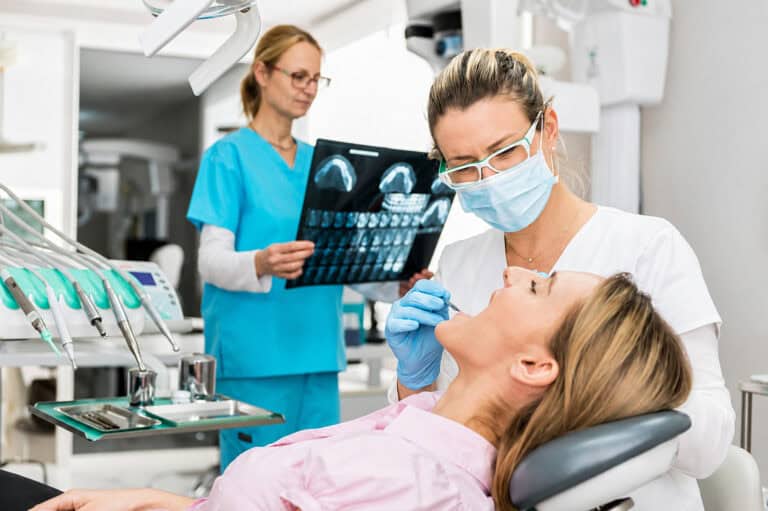
The first appointment includes an examination of the teeth, gums, jaw, and bite. Photographs, digital scans, or X-rays may also be taken.
This information helps the orthodontic team understand how the teeth need to move. You will receive a personal treatment plan and an estimated treatment time.
Treatment Stage
The attachments are bonded to the teeth and connected with a wire. Placing braces should not be painful, but pressure may begin several hours later as the teeth start responding.
Follow-up appointments are usually arranged every few weeks. During these visits, the progress is checked, and the wire or other parts of the braces may be adjusted.
Mild soreness can return after an adjustment, but it normally lasts only a few days.
Final Result And Retainer
When the teeth and bite reach their planned positions, the braces are removed. The teeth are then cleaned, and a retainer is prepared.
Orthodontic retainers help keep the teeth in their new positions. Without a retainer, they can gradually begin to move again.
How Long Does Treatment Take?
The full treatment often lasts between 12 and 24 months, but every case is different. Small alignment problems may require less time, while complex bite corrections can take longer.
Treatment time can be affected by:
- The type and severity of the problem
- The patient’s age
- How the teeth respond to movement
- Broken brackets or bent wires
- Missed appointments
- Incorrect use of rubber bands
- Poor oral hygiene
Following the dental team’s instructions helps keep the treatment on schedule.
Benefits Of Traditional Braces
Traditional braces remain an effective choice because they give the orthodontic team close control over tooth movement.
They can:
- Correct simple and complex alignment problems
- Improve the way the teeth meet
- Close spaces between teeth
- Create more room for crowded teeth
- Improve chewing and oral function
- Make properly aligned teeth easier to clean
- Produce long-term results when retainers are worn
Because braces remain fixed to the teeth, they work continuously without depending on the patient to insert and remove them.
Traditional Braces Vs Invisalign
Traditional braces are fixed in place, while Invisalign in Albania uses removable clear aligners.
Invisalign allows patients to remove the aligners while eating and brushing. However, the aligners must be worn for the recommended number of hours every day.
Traditional braces may offer more control for complex tooth movements and bite problems. They also remove the risk of forgetting to wear the appliance.
The best option depends on the condition of the teeth, the bite, age, daily habits, and treatment goals. A consultation is needed before deciding.
Eating During The First Week With Braces
Your teeth may feel too sensitive for hard foods during the first days. Choose foods that require little chewing, such as:
- Yogurt, eggs, and oatmeal
- Soft pasta and rice
- Mashed potatoes
- Soft fish or finely cut meat
- Bananas and other soft fruit
- Smoothies without hard seeds
- Soup that is not too hot
Avoid popcorn, nuts, ice, hard sweets, chewing gum, and sticky foods. These can loosen an attachment or bend the wire.
Apples, carrots, and firm foods do not always need to be completely avoided. Cut them into small pieces instead of biting into them with the front teeth.
Recovery And Daily Care
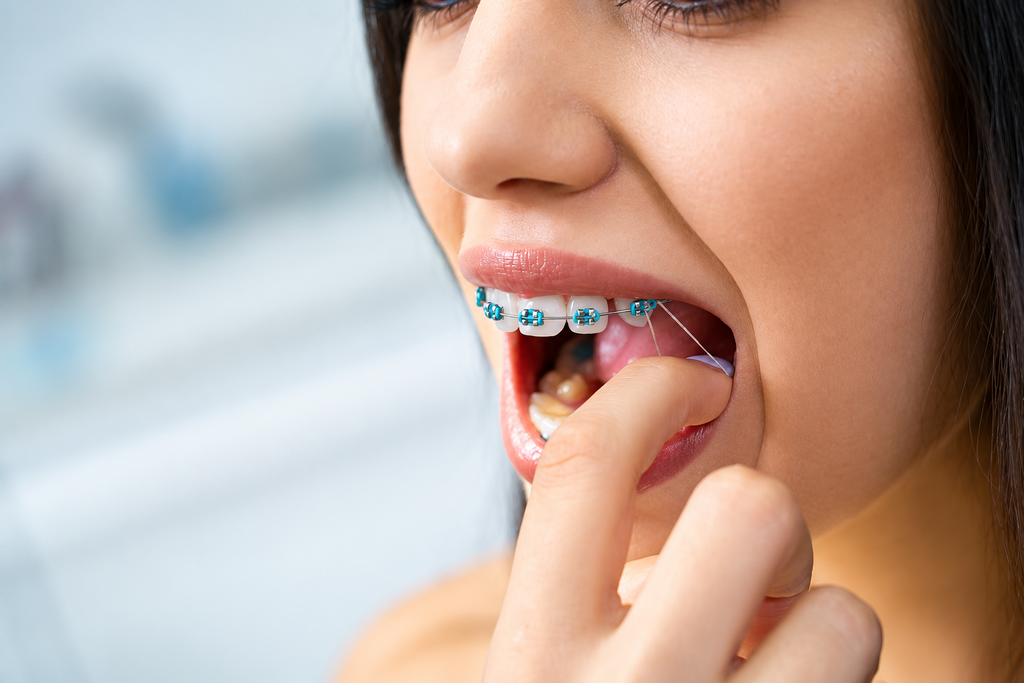
Brush after meals when possible. Use a soft toothbrush and clean above, below, and around every attachment. An interdental brush can help remove food from underneath the wire.
Floss once a day using an orthodontic floss threader or another tool recommended by the clinic. Take your time because plaque can collect around parts of the braces that are difficult to reach.
Orthodontic wax can cover an attachment or wire that rubs against the inside of the mouth. Mild soreness may also be managed with cool water, soft foods, and pain relief recommended by your dental professional.
Contact the clinic if an attachment becomes loose, a wire breaks, or the wire begins cutting the cheek. Severe pain, facial swelling, or signs of infection should not be treated as normal adjustment discomfort.
How Long Do The Results Last?
The results can last for many years, but teeth naturally have a tendency to move. Wearing the retainer as instructed is essential for protecting the final alignment.
Good oral hygiene and regular dental checks also help preserve the result. A damaged or lost retainer should be replaced before noticeable tooth movement develops.
Braces Treatment In Albania For International Patients
Braces require regular monitoring and adjustments. International patients should therefore discuss how often they can return to Albania before beginning treatment.
Virtus Dental Center creates individual orthodontic plans and monitors tooth movement during each stage. Patients who live abroad should provide information about their travel schedule so appointments can be planned correctly.
Unlike some dental treatments completed during one or two trips, braces are a longer commitment. Consistent follow-up is necessary for safe tooth movement and a stable result.
Frequently Asked Questions
Is Soreness Normal During The First Week?
Yes. Pressure and sensitivity are common after braces are placed. They should gradually improve within several days.
What Should I Do If A Wire Is Poking My Cheek?
Cover the end with orthodontic wax and contact the clinic. Do not cut or pull the wire unless the dental team specifically instructs you to do so.
Can I Brush My Teeth Normally?
Yes, but you must clean more carefully around the attachments and underneath the wire. A soft toothbrush and interdental brush can make cleaning easier.
What Happens If An Attachment Comes Loose?
Contact the clinic even if there is no pain. A loose attachment may stop applying the correct pressure and could delay treatment.
Conclusion
The first week with braces requires small changes to eating and daily cleaning. Mild soreness is expected, but it should become easier as your mouth adjusts.
Choose soft foods, protect irritated areas with orthodontic wax, clean around every part of the braces, and contact the clinic if anything breaks or causes severe discomfort.
Start Your Journey To A Straighter Smile At Virtus 😁✨
Virtus Dental Center offers personalised braces treatment for children, teenagers, and adults. From your first examination to regular adjustments and your final retainer, the team supports every stage of your new smile.
- 📲 Call or WhatsApp: +355 69 271 1166
- 📧 Email: info@virtus.al
- 🌐 Website: www.virtus.al
- 📍 Location: Seksioni B, Rruga Teodor Keko Pll 29, Tiranë 1027, Albania
Book your consultation today and discover how traditional braces can improve your smile and bite. 🦷



 English
  Italian
  Albanian
  French