

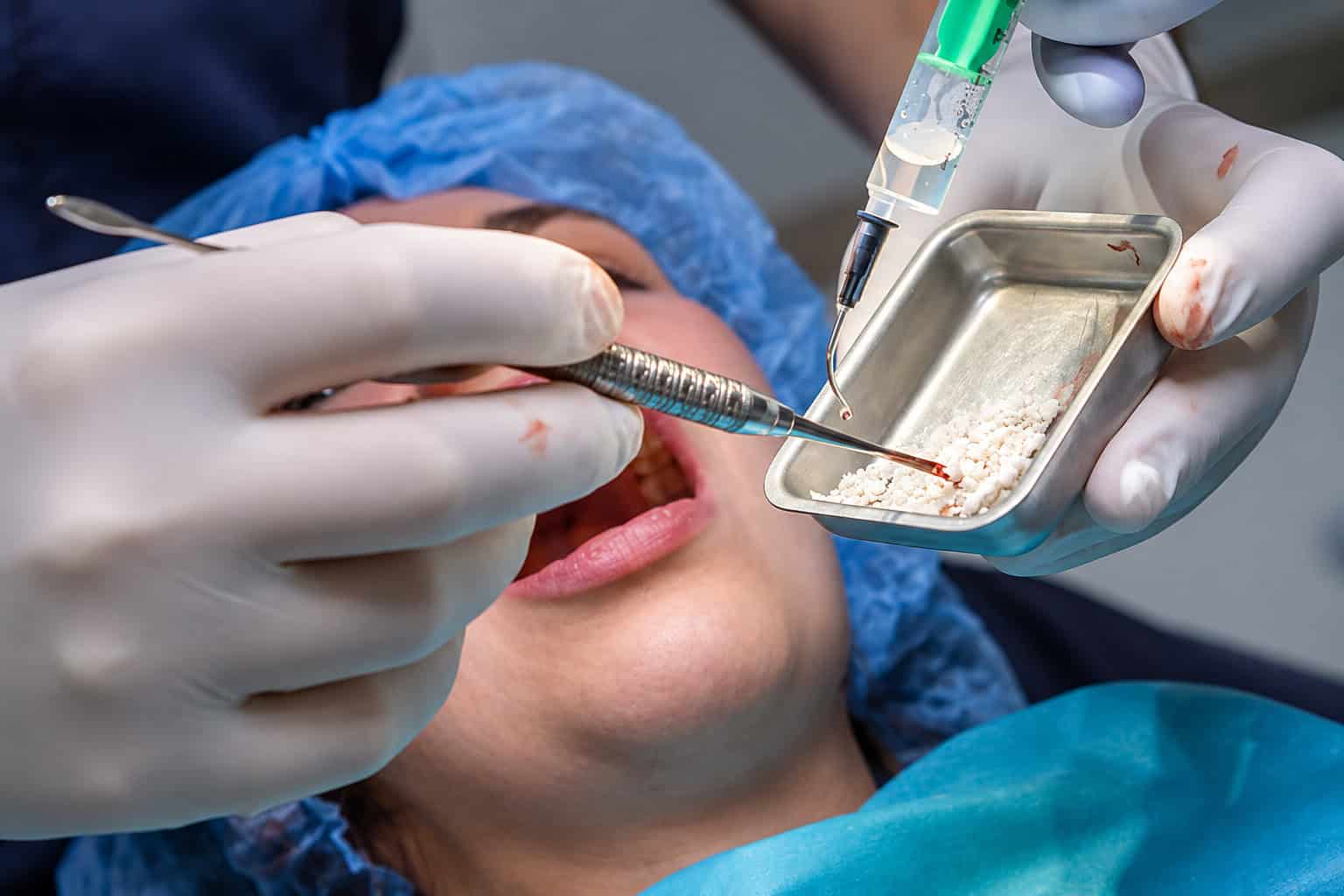
Bone graft material may come from your own body, a human donor, an animal source, or a synthetic material. Each option is carefully prepared for dental use and serves a different purpose. The right choice depends on the amount of missing bone, the implant plan, and your general health.
Quick Answer: Where Does Dental Bone Graft Material Come From?
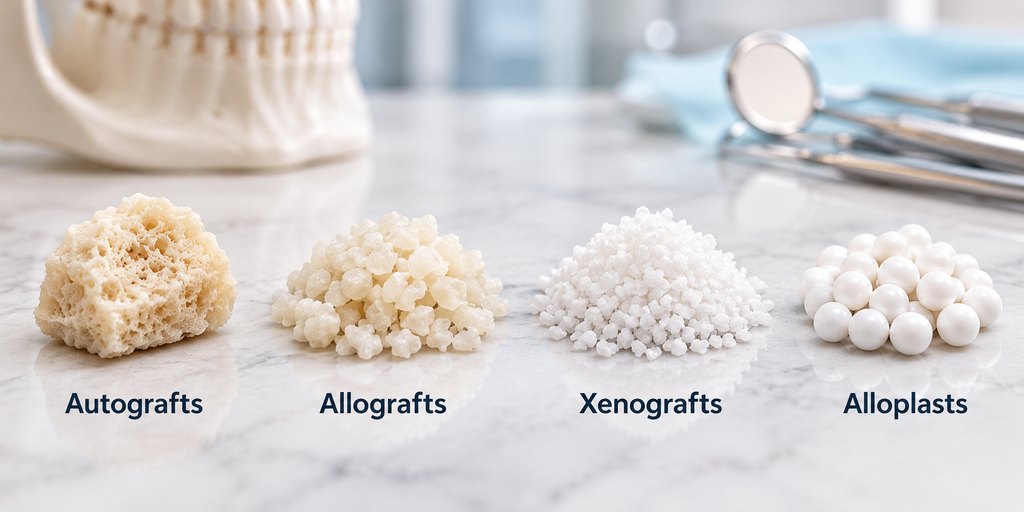
The four main sources of dental bone graft material are:
- Autograft: Bone taken from another area of your own body
- Allograft: Processed bone from a human donor
- Xenograft: Processed material from an animal source
- Alloplast: A fully synthetic bone substitute
There is no single material that is best for every patient. Small defects, large areas of bone loss, and sinus lift procedures may require different materials or a combination of them.
The dental surgeon makes the final decision after examining the jaw and studying dental images.
What Is Dental Bone Grafting?
Dental bone grafting is a procedure used to rebuild areas of the jaw that have lost height, width, or strength.
Bone loss can develop after tooth extraction, gum disease, dental infection, trauma, or many years of wearing dentures. Without enough bone, a dental implant may not have the support it needs.
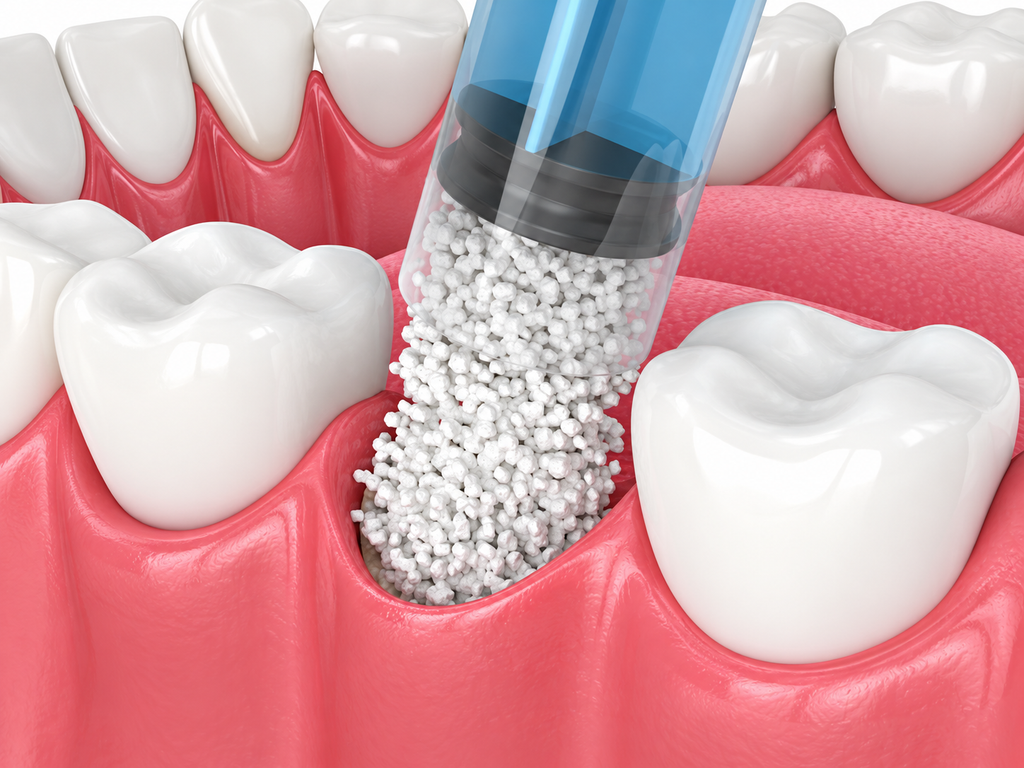
Bone graft material is placed inside the missing area. It normally acts as a framework that supports the formation of new bone. As healing continues, the graft becomes incorporated into the surrounding jaw.
Who Is Bone Grafting Suitable For?
Bone grafting may be recommended for patients who want dental implants but do not have enough healthy bone to support them.
It may also be suitable when:
- A tooth has recently been extracted
- Bone has been damaged by an infection
- Gum disease has affected the supporting bone
- The jaw ridge has become too thin
- The upper jaw has limited bone below the sinus
- A previous implant has failed and damaged the area
Not every implant patient needs a graft. A CBCT scan helps show whether there is enough bone and which areas require reconstruction.
How Does Bone Grafting Work?
First Appointment
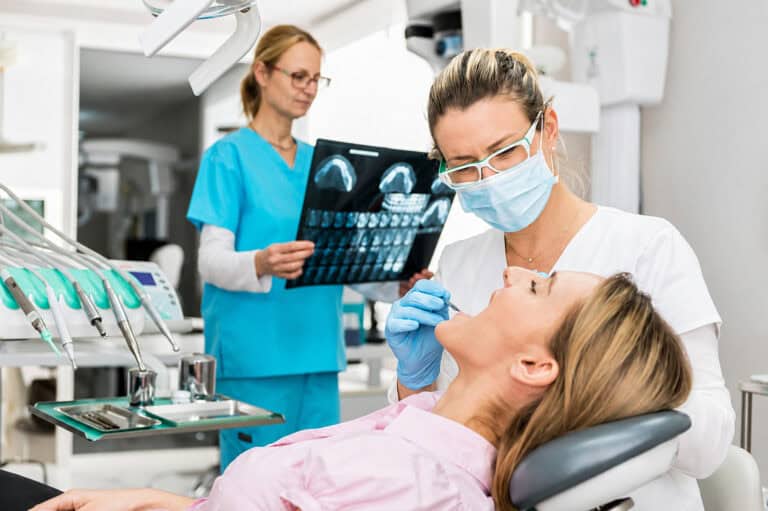
The first appointment includes an examination of the gums, remaining teeth, bite, and medical history. X-rays or a CBCT scan are used to measure the bone and locate important structures.
The surgeon then selects the graft material and explains whether it can be placed together with the implant or must heal first.
Treatment Stage
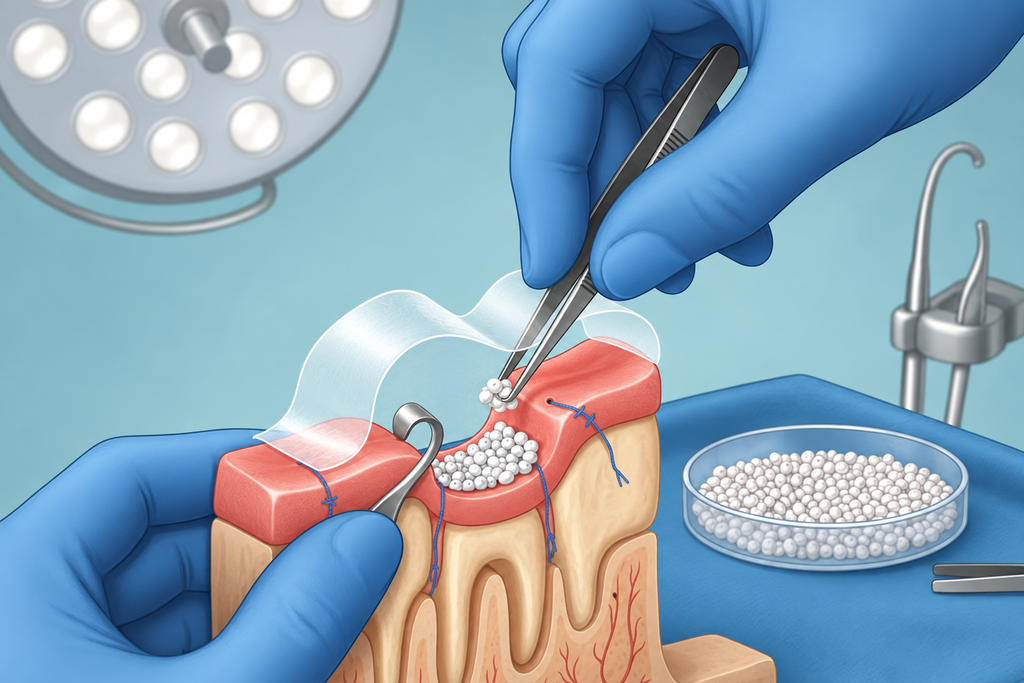
The area is numbed with local anaesthesia. The gum is carefully opened, and the bone graft material is placed into the planned area.
A protective membrane may be used to keep the material stable and separate it from the gum tissue. The area is then closed with stitches so healing can begin.
Final Restoration
After the graft has healed, new images may be taken to check the available bone. If the area is ready, the dental implant can be placed.
The implant must then integrate with the jaw before receiving its final crown or bridge. A larger graft can therefore add an extra stage to the complete treatment plan.
How Long Does Bone Grafting Take?
The surgery may take less than an hour for a small area. More complex reconstruction can require additional time.
Initial gum healing normally takes one to two weeks. The bone underneath usually needs around three to six months to develop enough strength for the next treatment stage.
Healing time depends on:
- The size and location of the graft
- The type of material used
- Whether an implant was placed at the same time
- Bone quality
- Smoking habits
- Oral hygiene
- General health
The next procedure should only begin after the surgeon confirms that the area is ready.
Benefits Of Bone Grafting
Bone grafting can create a stronger foundation for dental implants. It may also help preserve the shape of the jaw after a tooth is removed.
Other possible benefits include:
- Restoring lost bone width or height
- Improving implant stability
- Supporting the gum and facial tissues
- Rebuilding areas damaged by infection
- Reducing further collapse of an extraction site
- Making implant treatment possible in more complex cases
The goal is not simply to add material. It is to create healthy support in the exact area where the future implant is planned.
Autograft Vs Allograft Vs Xenograft Vs Alloplast
| Graft type | Where it comes from | Main advantage | Important consideration |
| Autograft | The patient’s own body | Contains the patient’s natural bone-forming properties | May require a second surgical area |
| Allograft | A screened human donor | Avoids taking bone from another area of the patient | Must be carefully processed and prepared |
| Xenograft | Usually a processed animal source | Provides a stable framework for new bone | May remain in the area for a longer time |
| Alloplast | Synthetic material | Contains no human or animal tissue | Different synthetic materials behave differently |
Autograft
An autograft uses bone taken from the patient. In dental procedures, it may be collected from another part of the jaw or chin. Larger cases may require a different donor area.
Because the bone comes from the same patient, it offers excellent biological compatibility. However, collecting it may create a second area that also needs to heal.
Allograft
An allograft comes from a human donor. The material is obtained through controlled tissue sources and processed before clinical use.
Its main benefit is that the patient does not need a second surgical site. The material provides a framework that helps the patient’s own bone grow into the area.
Xenograft
A xenograft comes from an animal source, commonly bovine bone. It is highly processed to remove organic components and prepare it for dental use.
This material maintains space well and can support gradual bone formation. It is often used alone or combined with another graft material.
Alloplast
An alloplast is produced from synthetic materials such as calcium phosphate, hydroxyapatite, or similar biocompatible compounds.
It does not contain human or animal tissue. Different synthetic products have different structures and healing properties, so the choice must match the clinical situation.
Recovery And Aftercare
Mild swelling, tenderness, or bruising may occur during the first days. These symptoms should gradually improve.
After treatment:
- Do not touch or press the grafted area.
- Choose soft foods during early recovery.
- Brush carefully around the surgical site.
- Take prescribed medicine exactly as instructed.
- Avoid smoking because it can slow healing.
- Avoid intense exercise during the first days.
- Attend all follow-up appointments.
Small graft particles may sometimes appear in the mouth during early healing. However, continuous bleeding, fever, pus, increasing pain, or significant opening of the wound requires a dental check.
How Long Do Bone Graft Results Last?
A successfully healed bone graft can provide long-term support for a dental implant. The implant transfers chewing pressure to the area, helping the rebuilt bone remain functional.
Long-term stability also depends on healthy gums, good oral hygiene, regular check-ups, and controlled bite pressure. Smoking and untreated gum disease can place both the grafted bone and future implant at risk.
Bone Grafting In Albania For International Patients
International patients should ask whether the graft and implant can be completed together. Small bone defects may sometimes be treated during implant placement. Larger grafts usually need to heal first.
This means treatment may require separate visits to Albania. Virtus Dental Center reviews X-rays and CBCT scans to prepare an initial plan before the patient travels.
Through its dental tourism service, the clinic can explain the treatment stages, expected healing period, and number of visits before travel arrangements are confirmed.
Frequently Asked Questions
Is Donor Bone Safe?
Donor graft material is screened and processed before clinical use. Your dental surgeon can explain the specific product selected for your treatment.
Is Animal Bone Placed Directly Into the Jaw?
No. Xenograft material is carefully processed and prepared for medical use before it is placed in the graft area.
Can I Choose a Synthetic Graft?
Synthetic material may be an option, but the choice depends on the size, location, and purpose of the graft. Patient preference can be discussed during the consultation.
Can Different Bone Graft Materials Be Combined?
Yes. Two materials may sometimes be combined to provide the biological and structural properties needed for a specific case.
Conclusion
Dental bone graft material can come from four main sources, and each offers different advantages. The correct choice cannot be made from the material name alone.
The surgeon must consider the amount of missing bone, the future implant position, healing needs, and the patient’s medical condition.
Rebuild The Foundation For Your New Smile At Virtus 🦷✨
Have you been told that you do not have enough bone for dental implants? Virtus Dental Center offers detailed 3D assessment, personalised bone grafting plans, advanced implant solutions, and continuous support for international patients.
- 📲 Call or WhatsApp: +355 69 271 1166
- 📧 Email: info@virtus.al
- 🌐 Website: www.virtus.al
- 📍 Location: Seksioni B, Rruga Teodor Keko Pll 29, Tiranë 1027, Albania
Send your dental X-rays or CBCT scan today and discover which bone graft option may prepare your smile for stable dental implants. 😊





 English
  Italian
  Albanian
  French