

Considering All-on-4 in Albania but worried that you will have to remove every natural tooth? The answer is no: treatment decisions depend on which teeth remain, their condition, and whether an entire dental arch truly needs replacing.
Does All-On-4 Mean Extracting Every Tooth?
All-on-4 is designed to replace the teeth of one complete upper or lower arch with a fixed restoration supported by four dental implants. It does not automatically involve removing teeth from both jaws, and it should not be used as a reason to extract healthy teeth unnecessarily.

For example, someone with severely damaged upper teeth but healthy lower teeth may need restoration of the upper arch only. Their lower teeth can remain untouched, provided they are healthy and work appropriately with the proposed bite.
The more important question is whether the remaining teeth within the arch being treated can be preserved. At Virtus Dental Center, that decision should begin with an individual examination and a discussion of realistic alternatives.
What Happens If You Still Have Teeth In The Treated Arch?
A conventional All-on-4 restoration replaces the complete row of teeth rather than filling isolated gaps. Consequently, any remaining natural teeth in that particular arch generally need to be removed if a full-arch implant bridge is selected.
This does not mean those teeth necessarily require extraction for medical reasons. A tooth may be treatable, yet unable to fit into the chosen full-arch prosthetic design; patients should understand that distinction before agreeing to an irreversible procedure.
If several natural teeth have a good long-term prognosis, preserving them with other restorations may be the more conservative choice. Explore our overview of dental implants in Albania to understand options beyond complete-arch replacement.
When Might Removing The Remaining Teeth Be Recommended?
Extraction can be reasonable when natural teeth can no longer provide reliable function or cannot be restored successfully. The decision should consider each tooth’s condition, the supporting bone, the gums, and the overall treatment plan. A second clinical opinion can be especially valuable when several potentially restorable teeth face extraction.
Common circumstances include:
- Advanced periodontal disease: Extensive bone loss and severe tooth mobility may make long-term preservation unrealistic.
- Extensive decay: Teeth with too little sound structure may not support effective restorations.
- Untreatable fractures: Some cracks extending into the root leave no dependable way to save the tooth.
- Repeated infection: A tooth may need extraction when appropriate treatment cannot control the problem.
- Widespread dental failure: Multiple teeth with poor prognoses may justify a coordinated full-arch solution.
Gum disease alone is not an automatic reason for removing all teeth. Our periodontal treatment services address conditions that may sometimes be managed while preserving natural teeth.
When Is Keeping Your Natural Teeth The Better Option?
Natural teeth deserve careful assessment before extraction because removing them is irreversible. A well-supported tooth that can be cleaned, restored, and maintained may continue functioning for years.
Possible tooth-preserving treatments include periodontal care, root canal treatment, fillings, and dental crowns. When only a few teeth are missing, individual implants or bridges may restore the gaps without replacing the entire arch.
The best decision also depends on practical details such as oral hygiene, bite forces, and willingness to attend maintenance visits. Our comparison of implants, bridges, and dentures explains the main alternatives when full-arch treatment is not essential.
How Does Virtus Assess Whether All-On-4 Is Suitable?
At Virtus Dental Center, All-on-4 is among the available implant treatments, alongside other restorative and surgical services. Our team reviews the condition of your remaining teeth and gums, your medical history, and the available jawbone before discussing a plan.
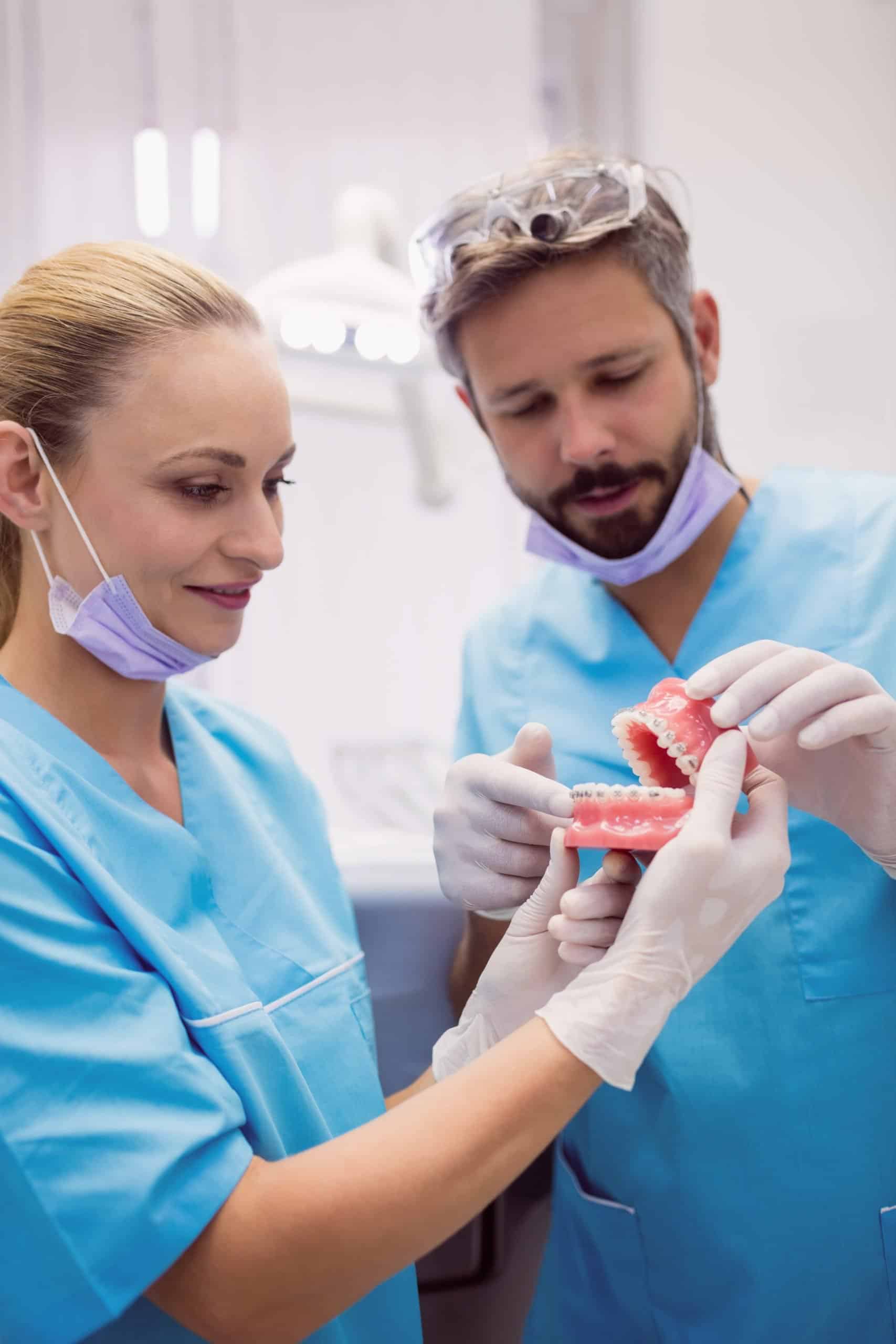
The assessment may involve:
- Clinical examination: Checking decay, fractures, loose teeth, gum inflammation, and how the jaws meet.
- Dental imaging: Using appropriate X-rays and, when indicated, CBCT imaging to study the bone and relevant anatomy.
- Tooth-by-tooth prognosis: Identifying which teeth can be treated and which have limited prospects.
- Restoration planning: Comparing tooth preservation, partial replacement, and a complete fixed arch.
- Shared decision-making: Explaining the surgical steps, limitations, healing period, and required follow-up.
Our All-on-4 treatment page describes the full-arch option, including customized prosthetic teeth and temporary restorations. However, scans and photographs reviewed remotely cannot replace the complete examination needed for a final extraction decision.
All-On-4 Or Another Treatment: What Changes?
The number of damaged or missing teeth matters, but it is not the only consideration. The long-term outlook of the natural teeth is often the deciding factor.
| Dental situation | Option worth discussing |
|---|---|
| One missing tooth, healthy neighbors | Single dental implant |
| Several gaps, stable remaining teeth | Implants, bridge, or partial denture |
| Loose teeth that may respond to treatment | Periodontal care and reassessment |
| Most teeth in one arch cannot be saved | Full-arch implant treatment, including All-on-4 |
| Extensive tooth loss with unsuitable implant conditions | Removable prosthesis or a staged alternative |
All-on-4 is not interchangeable with All-on-6, which uses six implants for a complete arch. Read our All-on-4 versus All-on-6 comparison for the factors that influence this choice.
Can Extractions And All-On-4 Surgery Happen Together?
In selected cases, teeth with a poor prognosis can be extracted and implants placed during the same surgical appointment. This depends on infection, bone quality, implant stability, anatomical conditions, and the overall safety of the plan.
Temporary fixed teeth may also be possible shortly after surgery when the implants achieve sufficient stability. These are not the same as the final prosthesis, and the implants still need time to integrate with the jawbone.
Some patients require additional healing, grafting, or a different provisional solution before receiving fixed teeth. If you are traveling from Italy or elsewhere, confirm the expected visits and follow-up requirements before booking transport.
Domande frequenti
Can I Have All-On-4 On The Upper Jaw Only?
Yes, a full-arch restoration can be planned for one jaw while the other retains natural teeth. The dentist must evaluate how the new restoration will meet the opposing teeth.
Can Four Implants Support A Few Replacement Teeth Instead?
All-on-4 refers specifically to a full-arch restoration supported by four implants. When only several teeth are missing, a smaller implant-supported bridge may be more appropriate.
Should I Remove Loose Teeth Before Coming To Albania?
Do not arrange extractions solely on the assumption that All-on-4 will be recommended. Bring recent dental records and imaging, then let the treating clinician assess the teeth and explain the plan.
Will My Natural Teeth Last Longer Than Implants?
Neither natural teeth nor implants come with a lifetime guarantee. Their longevity depends on their starting condition, disease control, oral hygiene, risk factors, and professional maintenance.
Can I Change My Mind After The Extractions?
Extracted teeth cannot be restored, even if the implant plan is later changed. Make sure you understand the alternatives, risks, and expected final restoration before consenting.
🦷 Before Choosing All-On-4, Let’s See Which Teeth Can Be Saved
If you have been told you need All-on-4, ask us to assess exactly which teeth can still be preserved and why. At Virtus Dental Center, we can discuss the findings with you and outline suitable alternatives before you commit to extractions.
- 📧 Email: info@virtus.al
- 📞 Phone: +355 69 27 111 66
- 📍 Address: Rruga Teodor Keko, Pll 29, 1027 Tirana, Albania
- 🌐 Consultation: Contact Virtus Dental Center


 Italian
 English
 Albanian
 French