

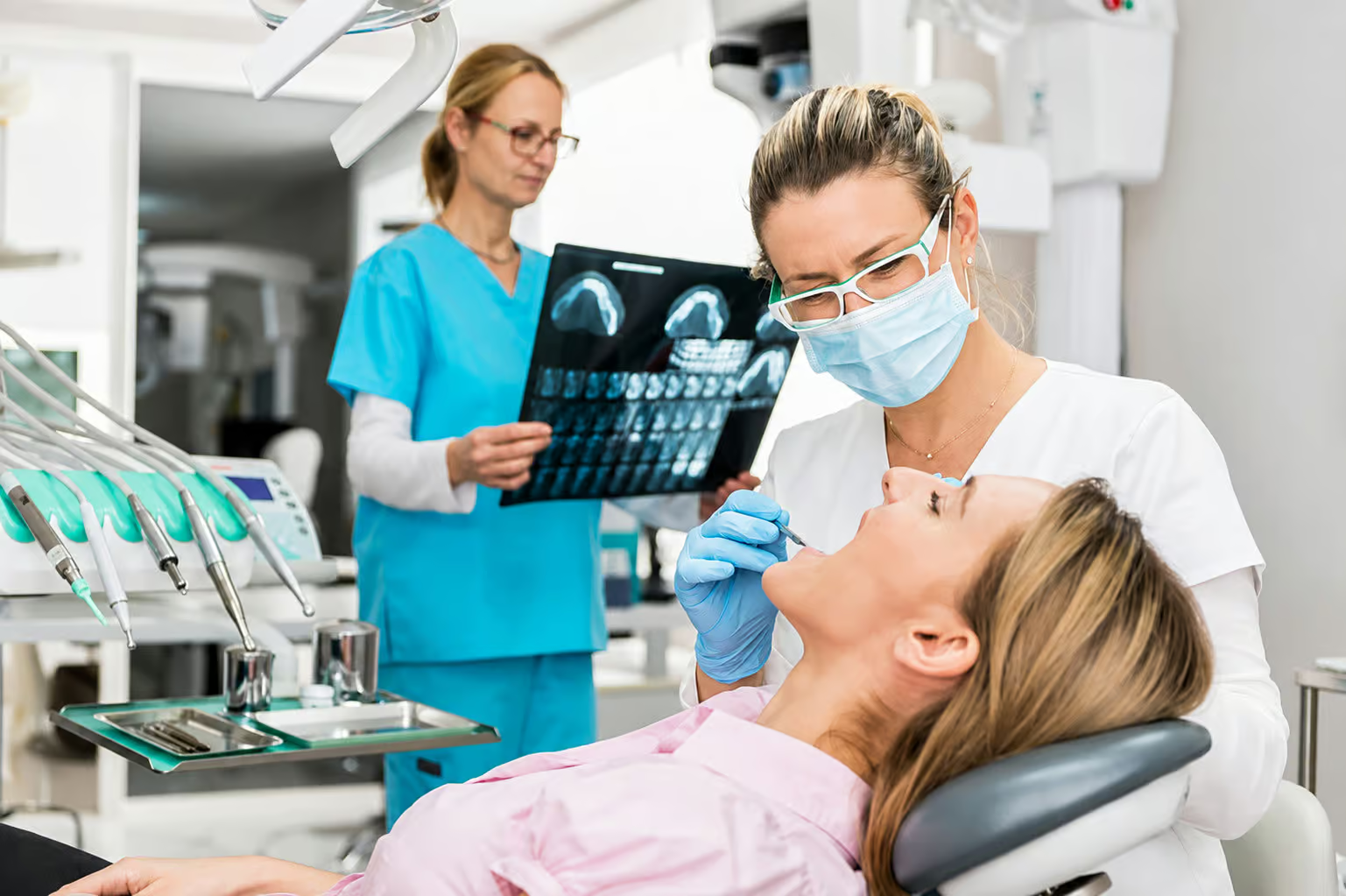
Choosing All-On-4 or All-On-6 is not simply a choice between four and six implants. Both treatments can support a fixed bridge for a full dental arch. The right option depends on the condition of your mouth, the position of the available bone, and the design of the final teeth.
What Are All-On-4 and All-On-6?
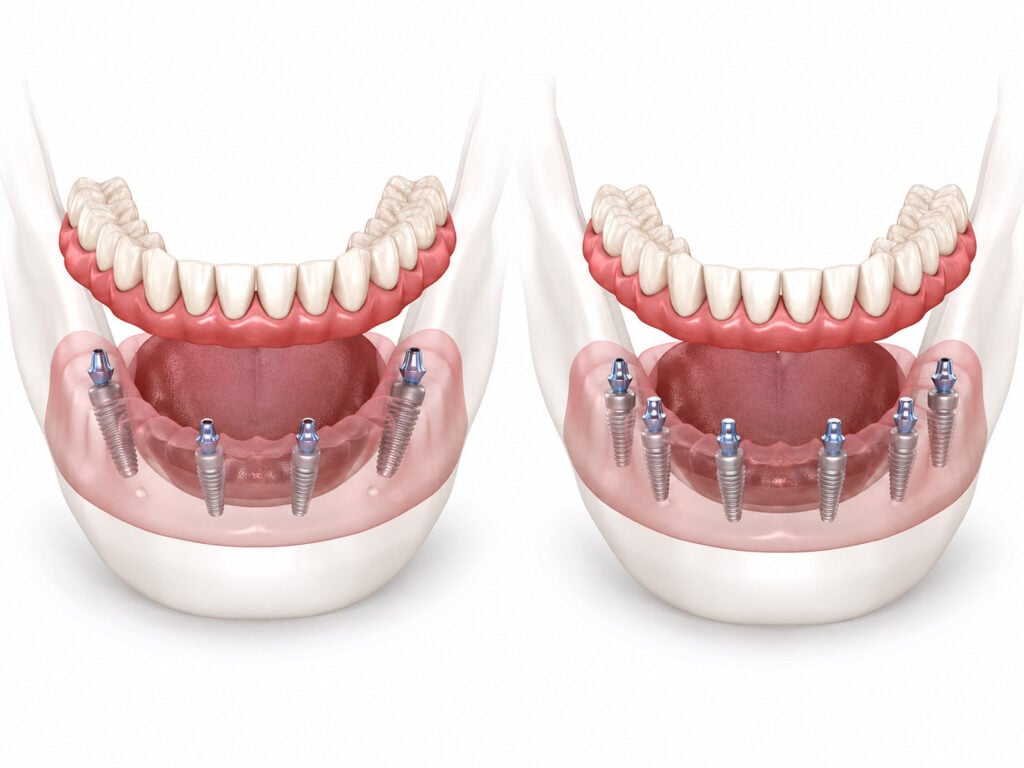
All-On-4 dental implants use four implants to support one fixed full-arch restoration. The two implants at the back may be placed at an angle to use available bone and create wider support.
All-On-6 dental implants use six implants to support the bridge. The two additional implants may provide a wider distribution of chewing pressure when the jaw has enough suitable bone.
Both treatments can be used in the upper jaw, lower jaw, or both jaws. Neither option is automatically right for every patient.
| Factor | All-On-4 | All-On-6. |
| Number of implants | Four per arch | Six per arch |
| Bone requirements | Can use selected areas of available bone | Requires suitable bone in more positions |
| Distribution of support | Support is planned across four implants | Pressure may be distributed across six implants |
| Surgery | Fewer implant sites | Two additional implant sites |
| Dhëmbë fiksë të përkohshëm | May be possible when stability is sufficient | May be possible when stability is sufficient |
| Final decision | Based on the full clinical plan | Based on the full clinical plan |
The number of implants alone does not decide the quality of the treatment. Implant position, bone support, bite balance, and bridge design are equally important.
1. Can Any Natural Teeth Still Be Saved?
Before comparing All-On-4 and All-On-6, the dental team should decide whether a complete arch replacement is truly necessary. Removing all remaining teeth should not be the first choice if some teeth can be treated and used safely.
Teeth with severe decay, major fractures, advanced gum disease, or poor support may not be reliable in the long term. Other teeth may still be suitable for root canal treatment, crowns, bridges, or gum care.
Some patients need a full fixed implant bridge. Others may benefit from rehabilitimin e plotë të gojës? that combines natural teeth with implants and restorations.
This first decision changes the entire treatment plan. All-On-4 and All-On-6 should only be compared after the condition of every remaining tooth has been assessed.
2. How Much Bone Is Available?
Dental implants need bone for initial support and long-term integration. However, the amount of bone can vary greatly across the same jaw.
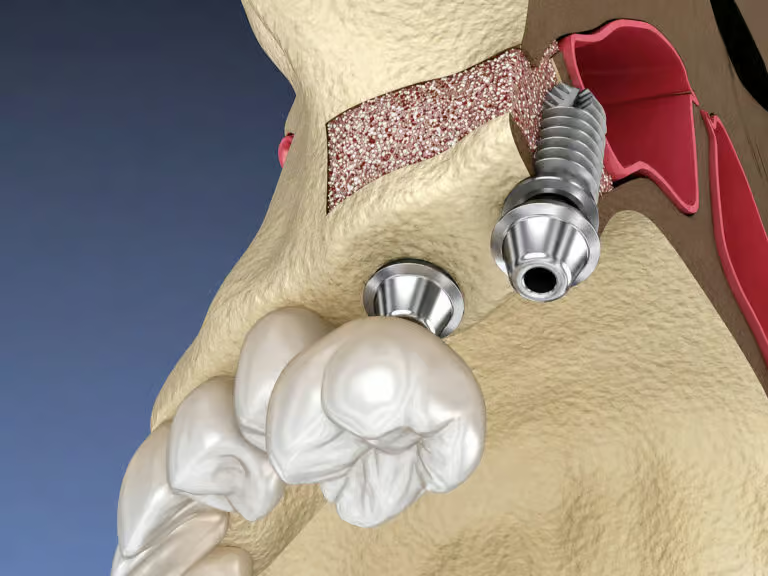
All-On-4 may be considered when the front part of the jaw has suitable bone but the back areas have reduced bone height. Angled back implants can sometimes use the available bone more effectively and reduce the need for additional procedures.
All-On-6 requires six useful implant positions. This does not mean the patient needs perfect bone everywhere, but there must be enough bone to place each implant safely and in a position that supports the bridge.
Having more bone does not automatically mean that six implants must be used. The team must also examine bone quality, implant spacing, and the final restoration.
3. Where Is the Bone Located?
Total bone volume is only part of the decision. Its location is just as important.
In the upper jaw, the sinus can limit implant placement in the back areas. In the lower jaw, the position of the main nerve must be carefully considered. Previous extractions, infections, or long-term denture use can also create uneven bone loss.
A 3D scan allows the implant team to map these areas. It shows whether four implants can be placed with good distribution or whether two additional safe positions are available for All-On-6.
Six implants placed too close together do not automatically create better support. The goal is to distribute them across the arch in useful positions.
4. How Strong Are Your Bite Forces?
Every full-arch bridge receives pressure during chewing. The amount and direction of this pressure differ from one patient to another.
A person who grinds or strongly clenches the teeth can place greater stress on the implants and bridge. Jaw muscle strength, bite pattern, and the type of teeth in the opposite jaw also affect the load.
When enough bone is available, All-On-6 may offer more points of support and wider load distribution. However, two extra implants do not remove the risks linked to an unbalanced bite or teeth grinding.
The bridge must still be designed carefully. A protective night guard may also be recommended after treatment for patients who grind their teeth.
5. What Is Present in the Opposite Jaw?
The upper and lower jaws should not be planned separately. The teeth in the opposite jaw affect the forces placed on the new restoration.
A fixed implant bridge that bites against natural teeth may experience different pressure from one that bites against a removable denture. Restoring both arches at the same time also requires the dental team to create a new bite relationship.
The available space between the jaws matters as well. The bridge needs enough room for strong materials, natural tooth shapes, and an area that the patient can clean.
The treatment plan must therefore consider the full mouth, even when only one arch is being restored.
6. How Will the Final Bridge Be Designed?
Implants are the foundation, but patients use the bridge placed on top of them every day. Its length, shape, material, and connection to the implants influence the choice between All-On-4 and All-On-6.
If the bridge extends too far beyond the back implant, the unsupported area can receive extra pressure. This extension is known as a cantilever. Implant position and the number of replacement teeth must be planned to control it.
The restoration must also leave space for cleaning under the bridge. A bridge that looks good but cannot be cleaned properly may create future gum and implant problems.
The material of the final teeth can influence bridge thickness and weight. The dental team should choose the implant plan together with the final prosthetic design, not as two separate decisions.
7. Can the Implants Support Temporary Fixed Teeth?
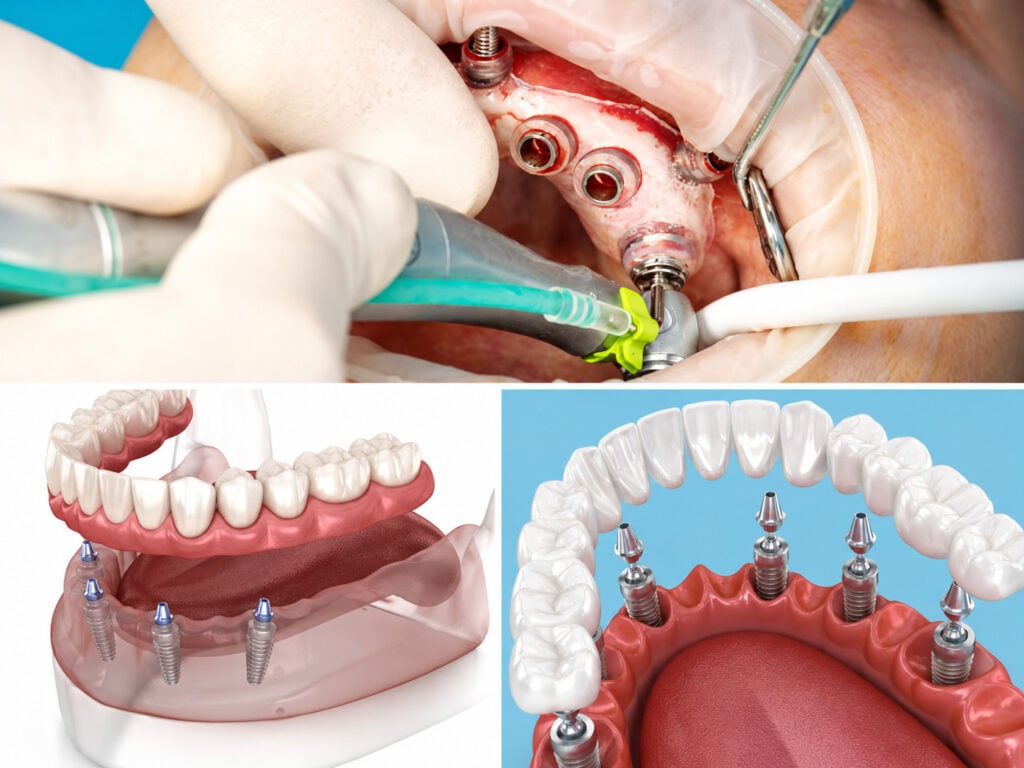
Many patients ask whether they can receive fixed teeth soon after implant surgery. This is possible in selected All-On-4 and All-On-6 cases, but the decision is made during treatment.
Each implant must achieve sufficient initial stability. The implants also need to be connected by a well-designed temporary bridge that controls pressure while healing takes place.
Bone quality, implant position, smoking, uncontrolled health conditions, and bite pressure can affect this decision. If stability is not sufficient, the safest plan may involve a different temporary restoration during healing.
Immediate-loading implantology refers to the early placement of temporary teeth. It does not mean that the permanent bridge is completed before the implants have healed.
All-On-4 and All-On-6 at Virtus Dental Center
Virtus Dental Center offers both All-On-4 and All-On-6 as part of its full-arch implant services. Each case is planned according to the remaining teeth, available bone, bite forces, implant positions, and the restoration that will be placed on top.
The team uses clinical examinations and digital imaging to decide whether four or six implants provide the most suitable foundation. Patients also receive a personalized plan covering the surgical stage, temporary teeth, healing period, and final bridge.
Discover Which Option Fits Your Case 🦷✨
Are you considering All-On-4 or All-On-6 for a full-mouth restoration? Contact Virtus Dental Center for an individual assessment and a clear comparison based on your dental condition.
📞 Phone and WhatsApp: +355 69 271 1166
📧 Email: info@virtus.al
🌐 Website: www.virtus.al
📍 Vendndodhja: Tiranë
Send your recent panoramic X-ray or 3D scan if available and take the first step toward a treatment plan created for you. 😊







 Albanian
  English
  Italian
  French