

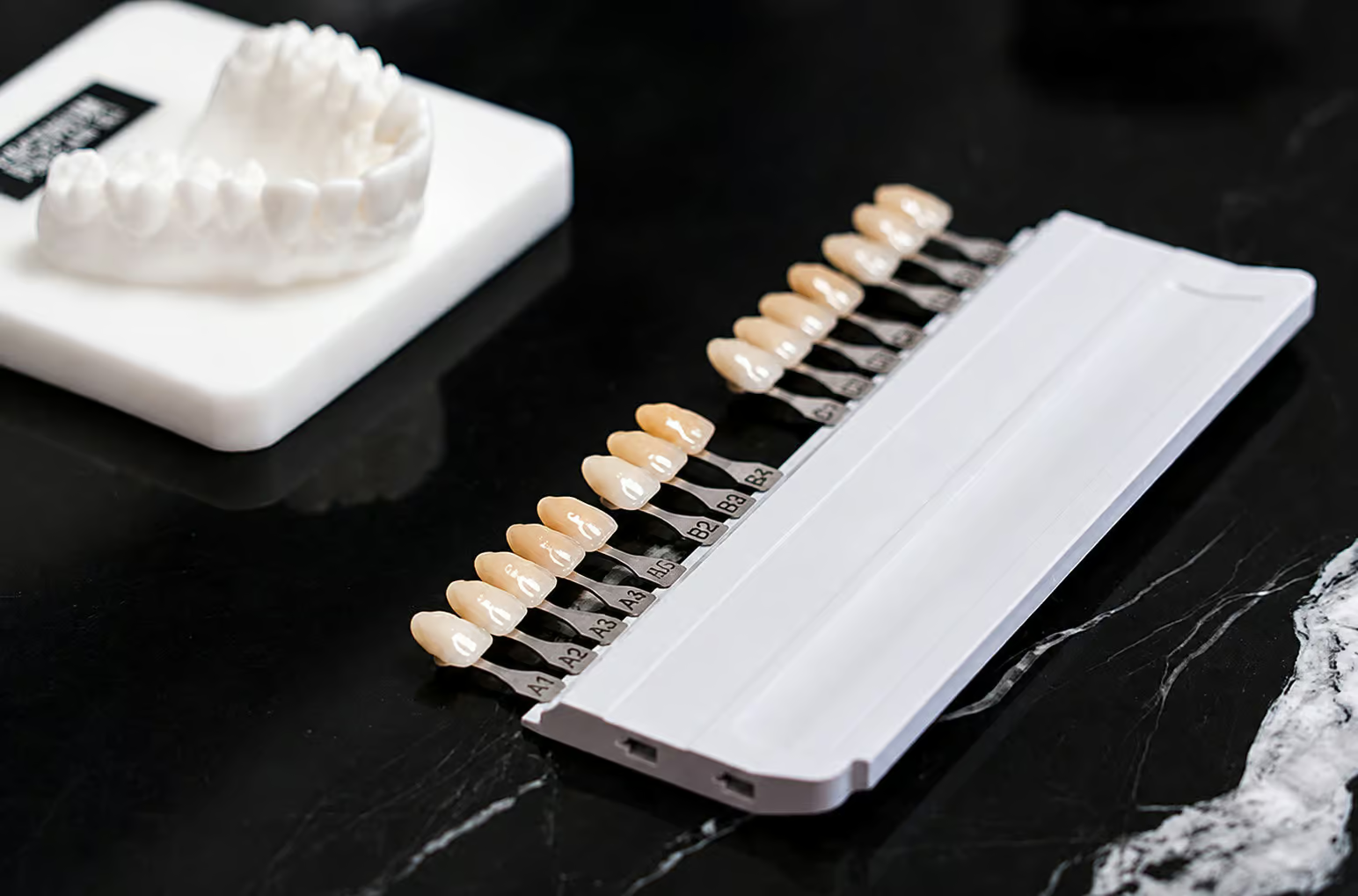
A full set of veneers does not have one standard number. Some patients may need four or six veneers, while others may need eight or ten to create a smooth transition across the visible smile. The correct number should be based on the teeth that can be seen, not on a fixed package.
What Does A “Full Set Of Veneers” Mean?
The phrase “full set” can be confusing. It does not normally mean placing veneers on every tooth in the mouth.
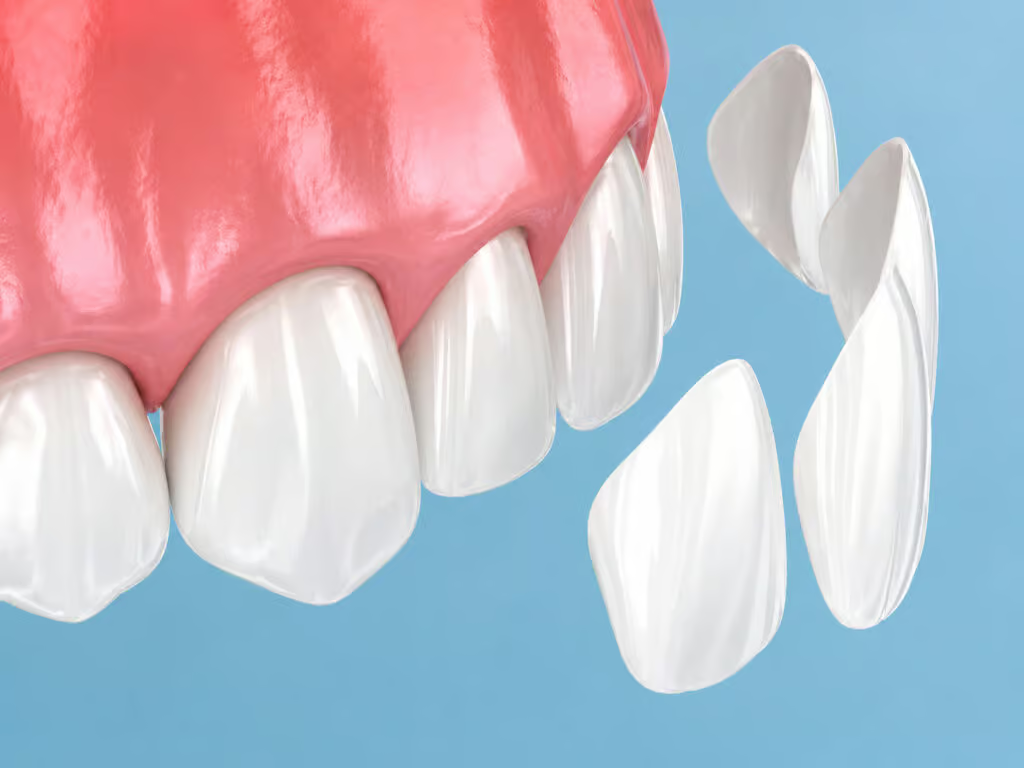
Veneers are thin restorations that cover the front surface of selected teeth. They are mainly used in the visible area of the smile.
For many patients, the upper front teeth are the main treatment area. Lower veneers are only considered when the lower teeth are clearly visible or when there is a strong difference in colour, shape, or wear.
The goal is to treat enough teeth to create a balanced result while preserving every healthy tooth that does not need treatment.
Common Numbers Of Veneers
The following table gives a general guide, but it is not a recommendation for every patient.
| Number of veneers | When it may be considered | Important limitation |
| 1–2 veneers | One or two teeth need local repair | Colour must blend closely with nearby teeth |
| 4 veneers | Changes are limited to the four front teeth | Side teeth may remain visible when smiling |
| 6 veneers | The front teeth and canines form most of the visible smile | May not cover a wide smile |
| 8 veneers | More teeth are visible across the smile | Requires assessment of both premolars |
| 10 veneers | The smile is very wide and back premolars are visible | More healthy teeth may need preparation |
| Upper and lower veneers | Both arches are clearly visible and need treatment | Lower teeth may need a different approach |
1. How Many Teeth Show When You Smile?
Smile width is one of the main factors. Some people show only the six front teeth, while others also show the first or second premolars.
The dentist should observe the teeth while the patient smiles naturally, speaks, and moves the lips. A posed smile may show fewer teeth than normal conversation.
If eight or ten teeth are visible, treating only four may create a sudden change between the veneers and the natural side teeth. When the smile is narrower, treating extra teeth may provide no clear benefit.
2. Can The Veneers Match The Untreated Teeth?
Veneers should not look separate from the rest of the mouth. Their shade must connect naturally with the untreated teeth beside them and the lower teeth below them.
If the planned shade is close to the natural tooth colour, a smaller number of veneers may blend well. If the patient chooses a much lighter shade, the difference at the sides of the smile may become visible.
Zbardhimi profesional i dhëmbëve may be completed before veneer shade selection when suitable. Whitening the untreated teeth can sometimes reduce the colour difference and limit the number of teeth that need veneers.
3. Is Every Tooth Healthy Enough For A Veneer?
The number should never be decided from appearance alone. Each tooth needs an individual examination.
Veneers usually work best when there is enough healthy enamel for bonding. A tooth with a large filling, deep decay, a major fracture, or very little remaining structure may need another type of restoration.
In these situations, a dental crown may provide more complete protection than a veneer. Other teeth in the same smile may still receive veneers, allowing different restorations to be combined within one plan.
Gum disease, cavities, and infection should be treated first.
4. Are The Teeth Misaligned Or Is The Bite Unbalanced?
Veneers can make small changes to tooth shape and close selected spaces. However, they should not be used to hide every alignment or bite problem.
If a tooth is strongly rotated or positioned too far forward, creating a straight appearance with a veneer may require unnecessary tooth reduction. Moving the tooth first can preserve more natural structure.
Invisalign clear aligners may be considered before veneers when the main issue is tooth position. After alignment, some patients need fewer veneers or thinner restorations.
The bite also affects stability. Opposite teeth should not place uncontrolled pressure on the veneer edges.
Why Treating More Teeth Is Not Always Better
Placing veneers often requires some degree of tooth preparation. Even when the amount is small, treatment may be irreversible because removed enamel does not grow back.
Every additional veneer will need professional checks and may eventually require repair or replacement. Healthy teeth should not be included only to reach a package number.
A good plan aims for continuity, not maximum coverage.
How Is The Final Number Tested Before Treatment?
The decision can be planned before the permanent veneers are made. Useful planning steps may include:
- Photographs of the smile at rest and in movement
- Digital scans of both dental arches
- Bite assessment
- Shade comparison with untreated teeth
- Rezultatet e pritshme
- A temporary mock-up placed over the teeth
A mock-up allows the patient and dental team to review tooth size, speech, and smile coverage. It can show whether the planned veneers stop too early.
Personalized Veneer Planning At Virtus Dental Center
Dental veneers at Virtus Dental Center include porcelain, composite, and E-Max options. The number, material, shade, and shape are selected after examining the visible smile, natural enamel, bite, gums, and nearby teeth.
Digital impressions help the team design each restoration according to the individual tooth. The aim is to create a connected result while avoiding treatment on teeth that do not need it.
Find the Right Number of Veneers for Your Smile 🦷✨
Are you considering four, six, eight, or ten veneers? Contact Virtus Dental Center for an individual assessment and a clear tooth-by-tooth treatment plan.
📞 Phone and WhatsApp: +355 69 271 1166
📧 Email: info@virtus.al
🌐 Website: www.virtus.al
📍 Vendndodhja: Tiranë
Send clear photographs of your smile for an initial review and discover which treatment options may suit your dental condition. 😊









 Albanian
  English
  Italian
  French